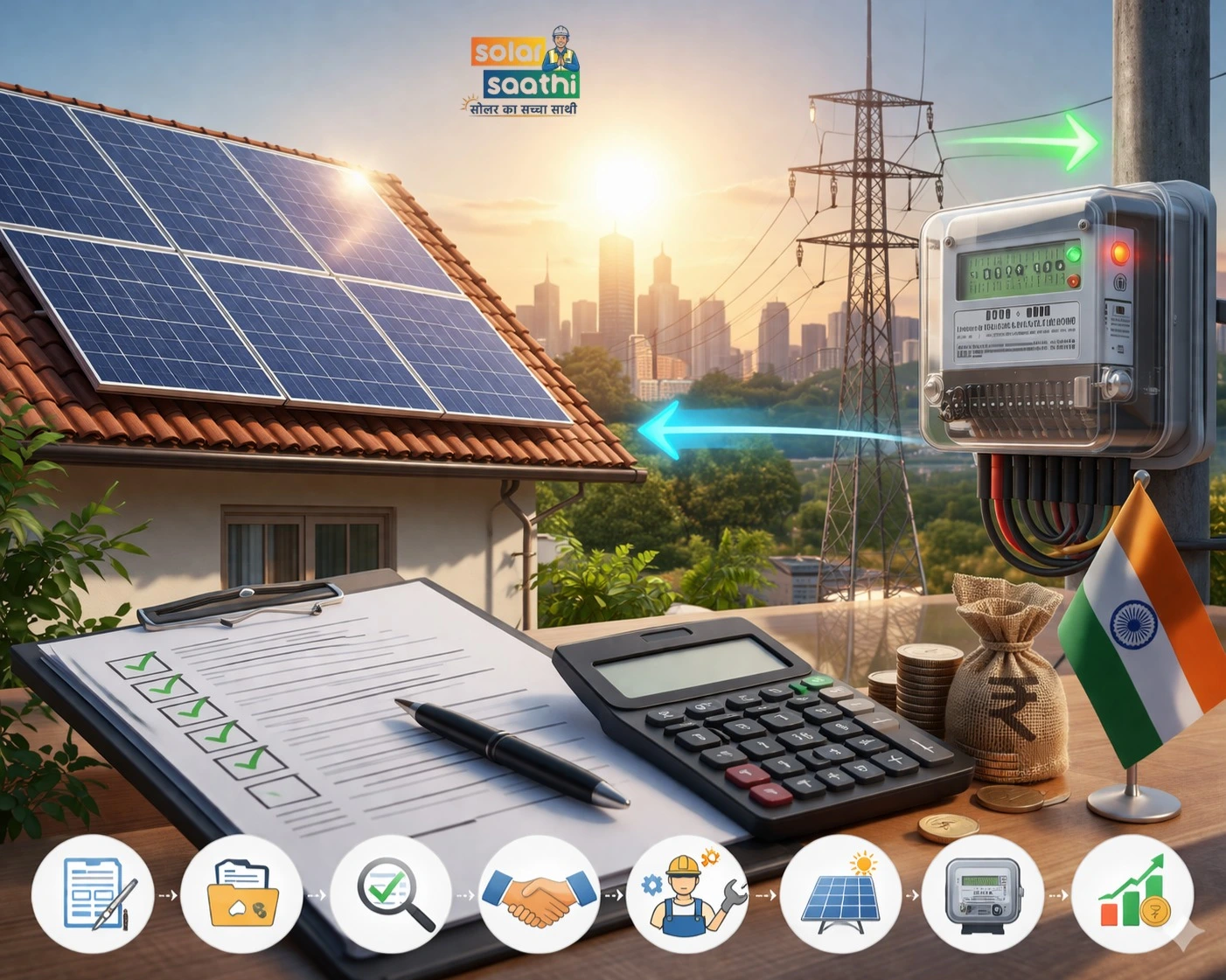
Electricity bills are rising every year. Most homeowners feel trapped — they keep paying more but get no control.
Here's the reality: your rooftop can reduce your electricity bill to almost zero. This is where solar net metering in India comes in. It is not just a solar feature. It is a smart billing system.
You generate electricity from your solar panels. You use what you need. And the extra energy earns you credits. This means less dependency on DISCOM, lower bills every month, and faster recovery of your solar investment.
In this guide, you will learn what net metering is, how it works in India, the types of net metering systems, and the real benefits and savings you can expect.
What is Net Metering?
Let's keep it simple.
Net metering meaning: you pay only for the electricity you actually use.
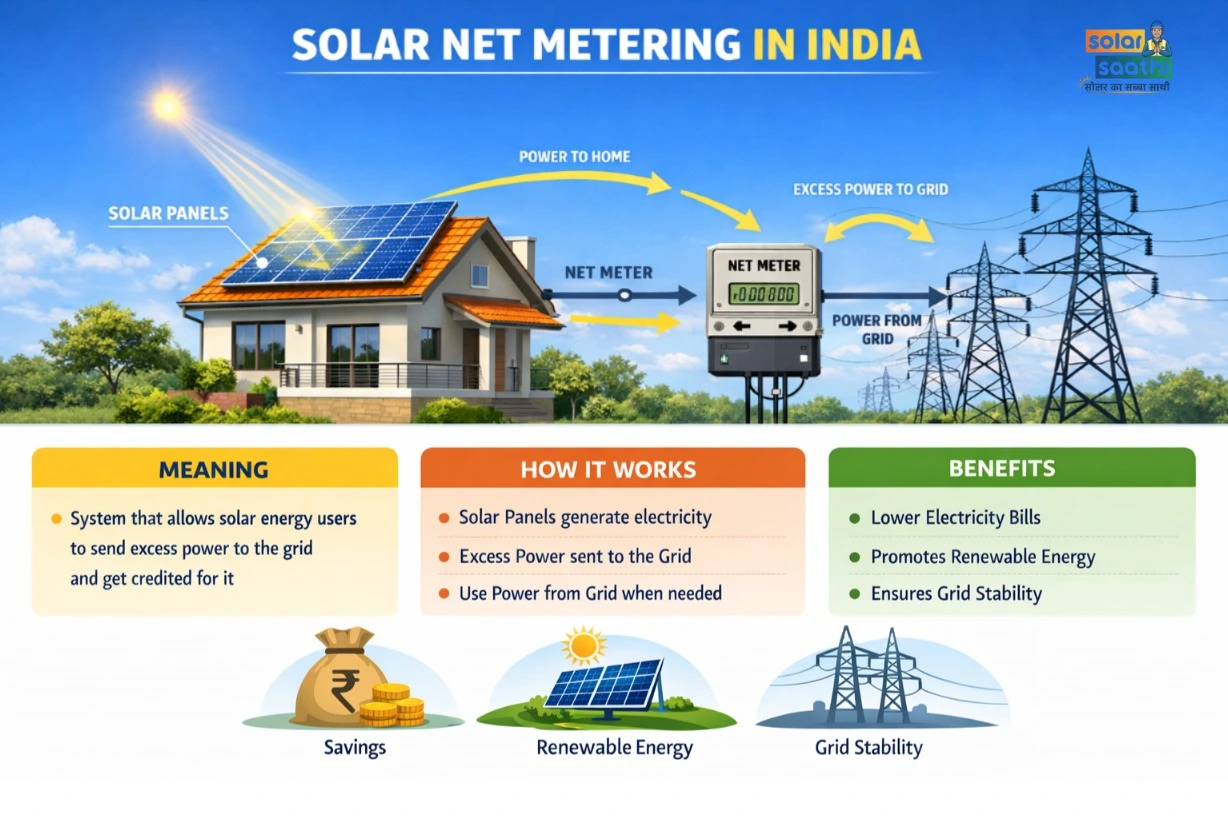
Here is how it works:
- Your solar panels generate electricity
- You use that power in your home
- Extra electricity goes to the grid
- You get credits for that extra power
Later, when you need electricity (like at night), you use those credits. So instead of wasting electricity, you store value in the grid.
This is the most basic net metering explanation for beginners. To understand this better, first learn how solar energy works in real-world applications.
Net Metering for Solar Systems: What It Means
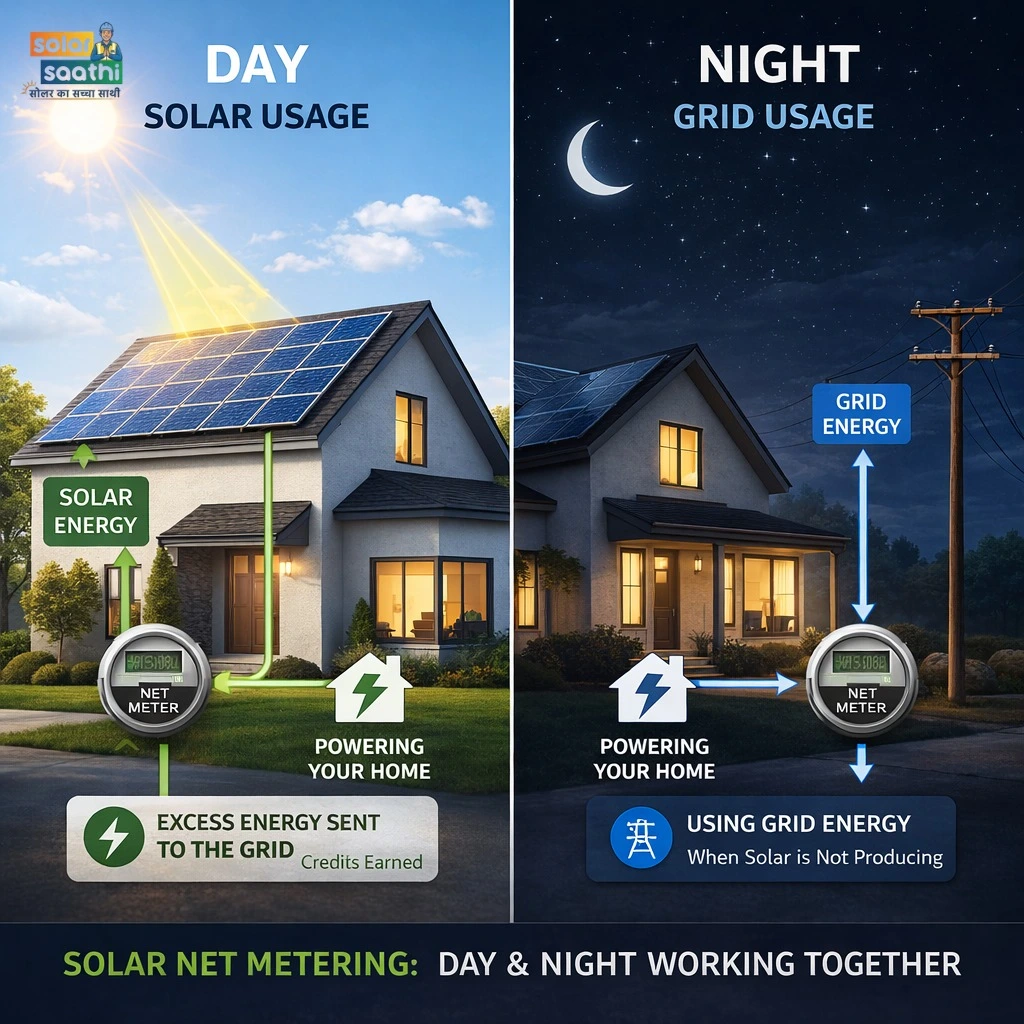
A net metering solar system connects your rooftop solar setup to the electricity grid. It works like a two-way system.
During the day:
- Solar panels produce electricity
- Your home consumes power first
- Extra electricity goes to the grid
During night or low sunlight:
- You take electricity from the grid
- Your earned credits are used
This is how solar net metering balances power generation and power consumption. No energy is wasted.
How Solar Net Metering Works in India
Let's break down how net metering works step by step:
- Solar panels generate electricity during the day
- Your home uses this electricity first
- Extra power goes to the grid
- You earn energy credits (units)
- At night, you use those credits
This is how net metering balances your electricity usage.
Simple Net Metering Example
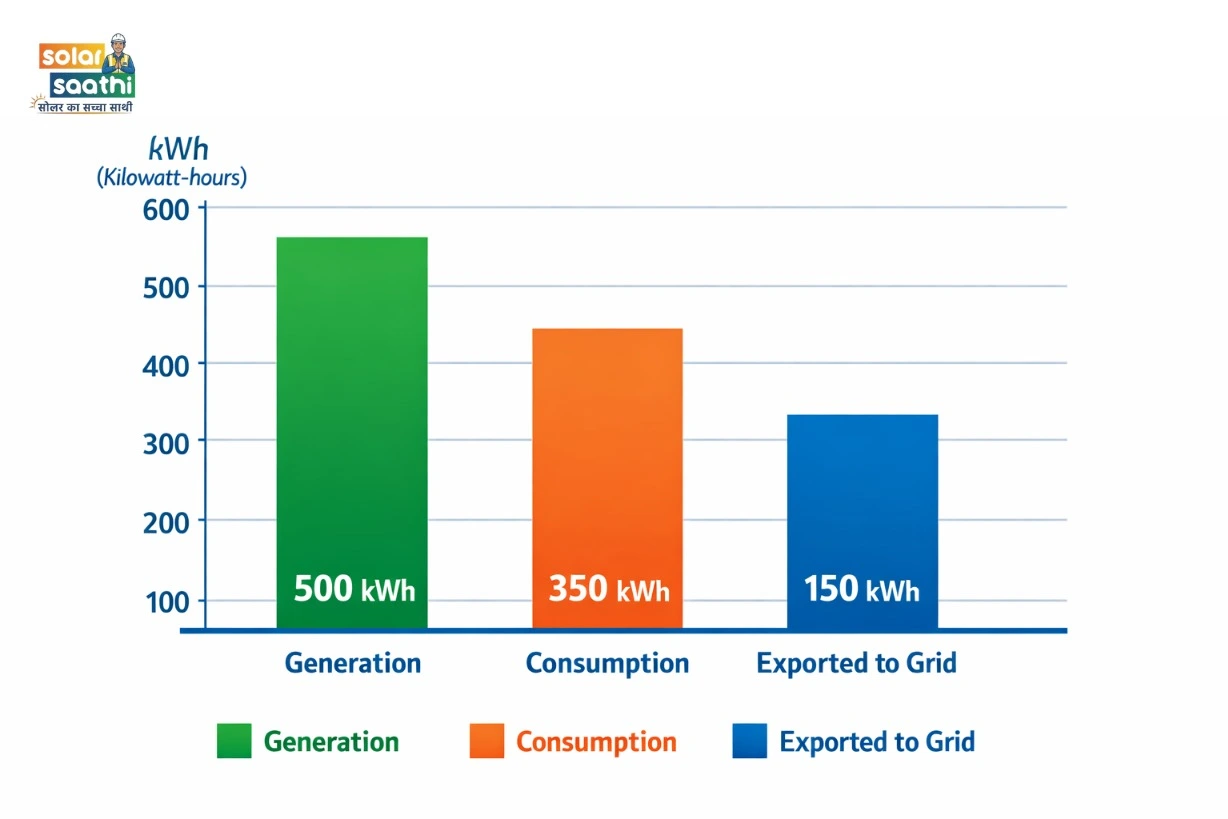
Let's understand with a real example:
- You produce: 500 units
- You use: 350 units
- Extra sent to grid: 150 units
Later, you use those 150 units at night. Your final bill shows only the remaining units (if any). This is how net metering directly reduces your bill every single month.
Understanding Net Metering & Solar Meter Readings
A special meter is used in rooftop solar net metering called a bi-directional meter. Monitoring these readings is important for maintaining solar system performance and maximising savings.
It tracks two things:
- Units you take from the grid
- Units you send to the grid
At the end of the billing cycle, your bill shows net units only.
Net Units = Import − Export
How to Read a Solar Power Meter (Step-by-Step Guide)
Reading your solar meter is simple. Follow these steps:
- Check total units (kWh reading)
- Look at import reading (grid usage)
- Check export reading (solar sent to the grid)
- Calculate net units = Import − Export
This is how your net metering solar system reduces bills every billing cycle.
Types of Net Metering Models in India
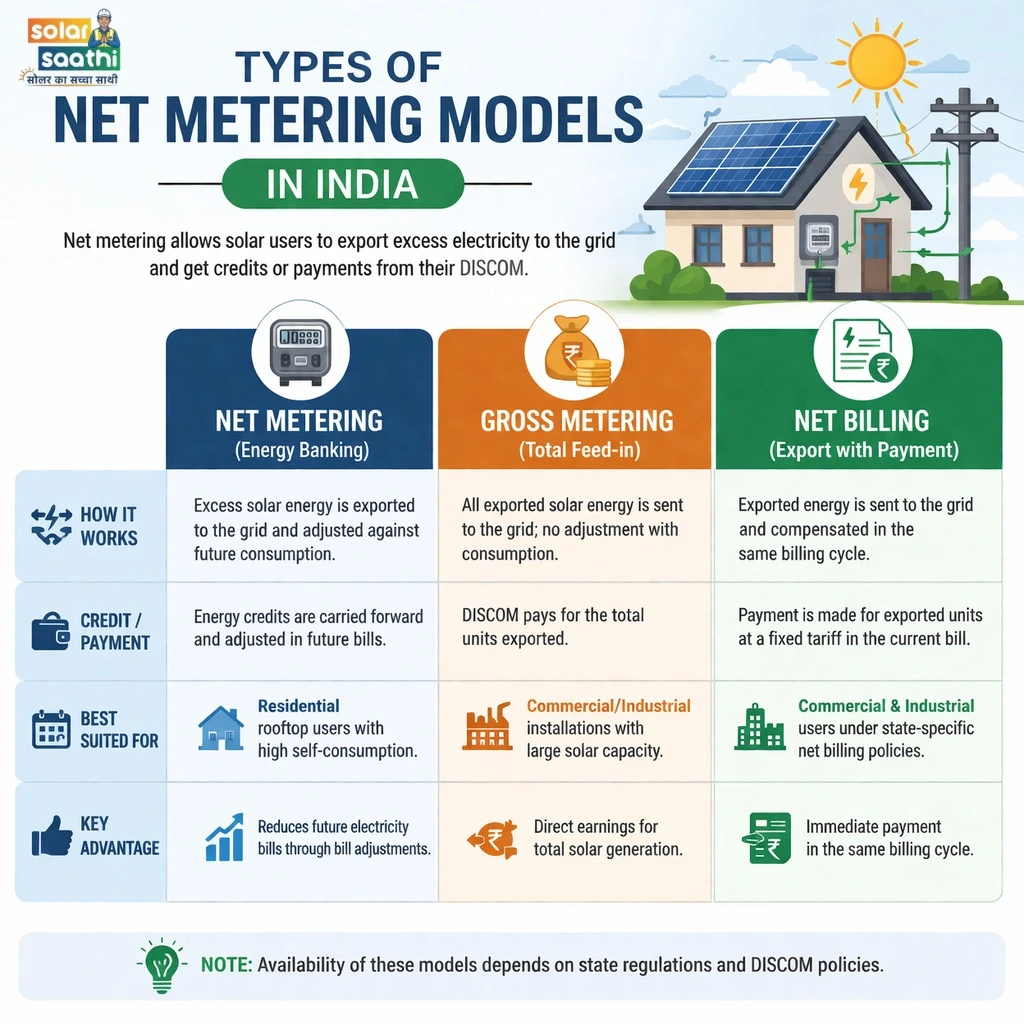
Not all net metering systems work the same. Here are the main types used in India.
Net Metering
You get energy credits for extra power sent to the grid. You pay only for net units used. This is the most common model in India and is best suited for homes and small businesses.
Net Billing
You sell electricity at a fixed rate and buy electricity at a different rate. It is slightly less beneficial than pure net metering but still reduces your overall bill.
Gross Metering
You sell 100% of your solar power to the grid and buy all your electricity separately at the retail rate. This model is used mostly in large commercial and industrial projects.
Virtual Net Metering
Used in apartments or shared buildings where multiple users share one solar system. This model is growing in urban areas across India.
Solar Net Metering in India: Rules & State Policies
Solar net metering in India is controlled by state DISCOMs. Some common rules that apply across most states:
- You must own the property
- System size should match your load
- Installation must follow MNRE guidelines
- Approval is required before installation
Important Insight
Policies are not the same everywhere. Some states allow systems up to 1 MW while others restrict to 500 kW. That is why you should always check local DISCOM rules before installing solar.
Ignoring this can delay approvals or reduce your benefits significantly. Before installation, it is highly recommended to conduct a solar site survey and choose the right partner through proper solar vendor selection.
Key Components of a Net Metering Solar System
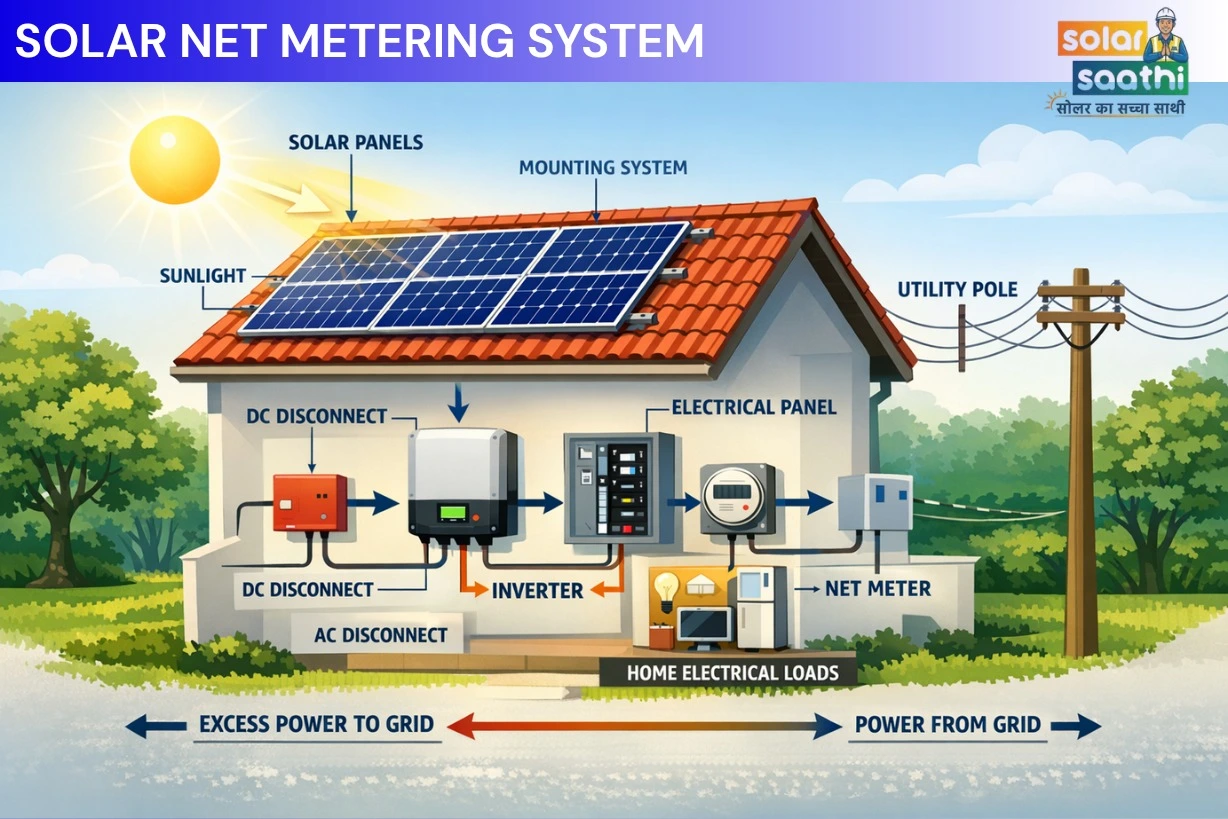
A net metering solar system includes several components. Each part plays an important role.
| Component | Role |
|---|---|
| Solar panels | Generate electricity from sunlight |
| Solar inverter | Converts DC to AC power |
| Net meter | Tracks import and export units |
| Mounting structure | Holds panels securely on your roof |
| Wiring & distribution board | Manages power flow safely |
Understanding solar panel technology helps you choose better components and improve overall system efficiency. Without proper installation, system performance drops and savings reduce significantly.
Benefits of Net Metering: How It Reduces Your Electricity Bill
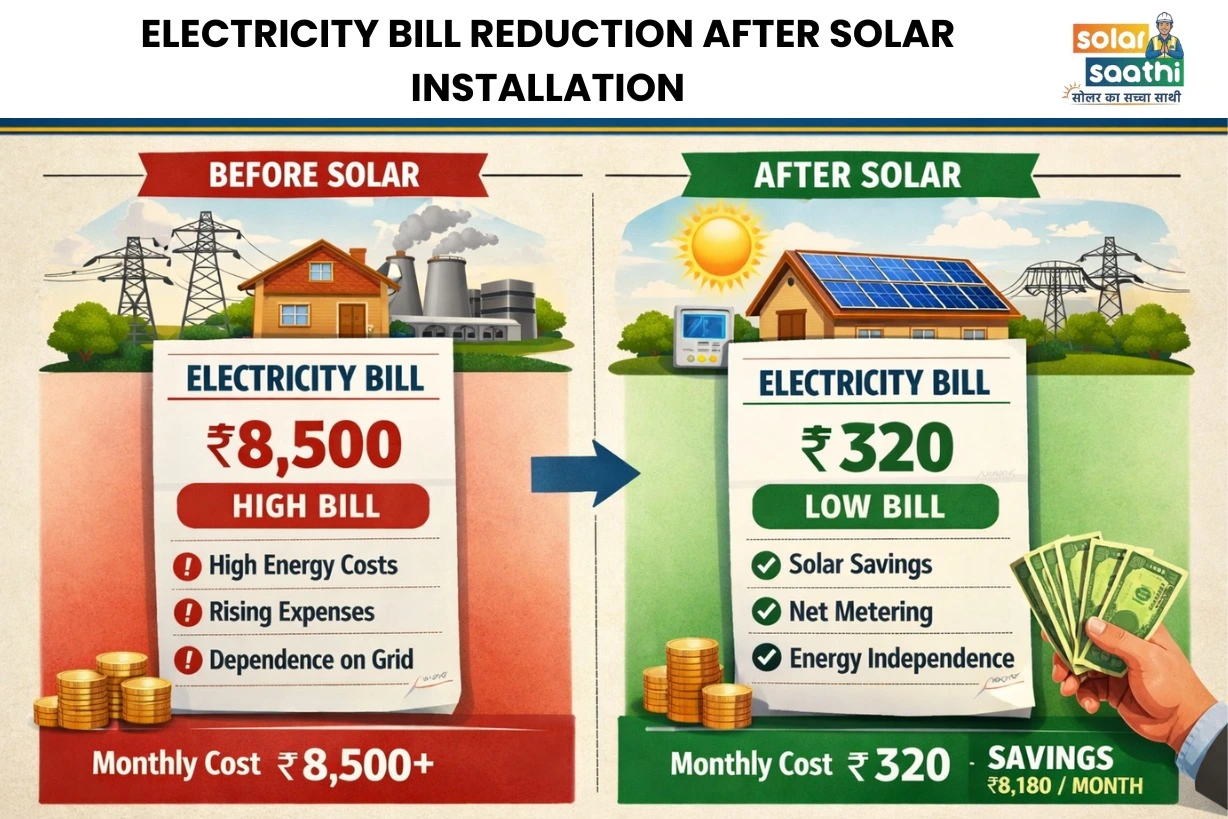
This is the main reason people choose solar net metering.
1. Huge Electricity Bill Savings
You pay only for net usage. Most homes save 70% to 90% on electricity bills. In some cases, bills become zero.
2. Faster Return on Investment
Solar systems recover costs faster because savings start from day one. You save money every month and earn credits for extra energy. Typical payback period is 3 to 5 years depending on usage.
3. Grid Acts Like a Battery
You do not need expensive batteries. The grid stores your extra electricity. This reduces both system cost and maintenance issues significantly.
4. Environmentally Friendly
Solar energy is clean. It reduces pollution, lowers your carbon footprint, and supports sustainable living for future generations.
5. Energy Independence
You depend less on electricity companies and control your own power usage. This gives you more control over electricity usage and protects you from rising tariffs.
These savings are part of the broader advantages of solar energy for homeowners and businesses across India.
Disadvantages of Net Metering in India
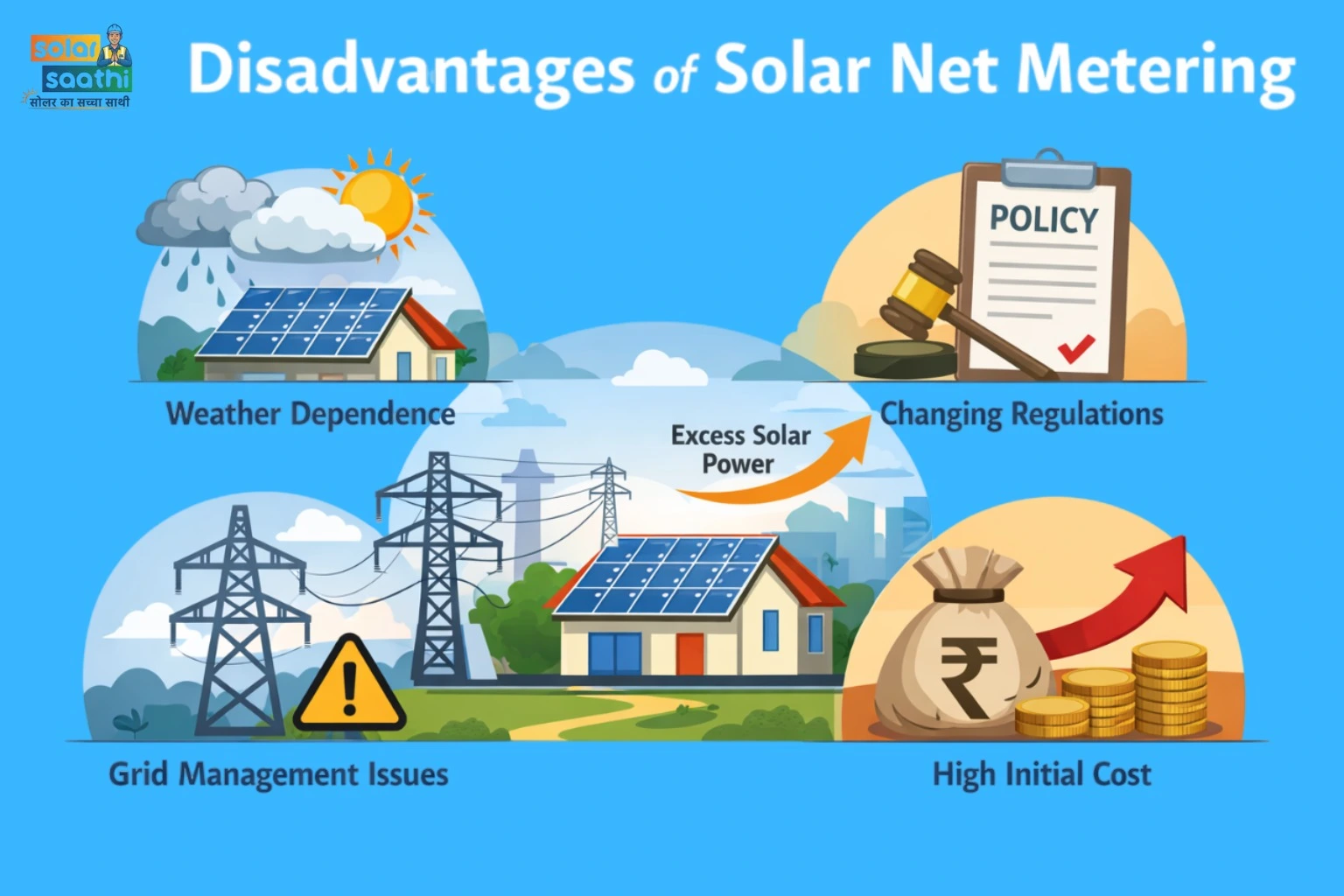
Net metering is powerful. But it is not perfect. You should understand the downsides before investing.
1. High Initial Investment
Solar systems need upfront investment. Costs include solar panels, inverter, installation, and net meter setup. For many homeowners, this feels expensive. But most people recover this cost in 3–5 years through savings. After that, electricity is almost free.
2. Regulatory & Policy Risks
Net metering depends on government rules controlled by state DISCOMs and energy regulators. Sometimes policies change — export rates may reduce, system size limits may change, or net metering may shift to net billing. This can affect your long-term savings. That is why checking the latest state policy is critical before installation.
3. Grid Management Challenges
The electricity grid was not originally built for two-way power flow. When many homes send solar power, grid load can become unstable and voltage fluctuations may occur. To handle this, DISCOMs may limit solar capacity or delay approvals, which can slow down your solar project.
4. Variability in Solar Energy Production
Solar power is not constant. It depends on sunlight availability, weather conditions, and seasonal changes. Cloudy days and monsoon seasons mean reduced output, so you may still depend on grid power and savings may fluctuate month to month. Design the system properly and keep realistic expectations.
Plan Before You Install
Before installing solar, take smart steps. Most people either save money or lose it at this stage — the difference is planning.
You can use a solar calculator to estimate the right system size and a savings calculator to clearly understand your return on investment.
It is also important to optimise your panel placement using a solar panel angle calculator to get maximum efficiency. The correct solar panel tilt angle can improve output by 10–25%.
These tools help you estimate:
- System size required
- Monthly savings potential
- Payback period
Make sure you understand the basics of solar energy before investing. This helps you make smarter decisions and avoid common mistakes. If you are still unsure, getting expert guidance through solar consultancy services can help you plan everything correctly and avoid costly errors.
Final Thoughts on Solar Net Metering in India
Now you clearly understand what is net metering and why it matters. It is not just a billing method. It is a smart system that saves money, maximises solar usage, and reduces electricity dependency.
If your electricity bill is high, ignoring net metering is a mistake. Because every month you delay, you lose money.
Want to reduce your electricity bill with solar?
Get help through solar advisory services for residential, commercial, or industrial needs. You can also check your solar requirements using our solar calculator based on your monthly bills.
Take action today. Every month you delay = money lost.
FAQs
What is net metering in India?
Net metering in India is a billing system for solar users. It allows you to send extra electricity from your solar panels to the grid. In return, you earn energy credits that help reduce your future electricity bill by offsetting grid usage.
What is solar net metering in simple words?
Solar net metering means you use solar power first in your home. If extra electricity is generated, it goes to the grid and you receive credits for that energy. Later, you use those credits when your solar system is not producing power.
How does net metering work in India?
In India, solar panels generate electricity during the day. Your home uses it first. Any extra power is exported to the grid through a net meter. You earn credits which you can use at night or during low solar generation periods.
What is the meaning of net metering?
Net metering meaning is simple. It is a system where your electricity bill is calculated based on net usage — the total electricity you consume minus the solar energy you export to the grid during a billing cycle.
How does solar net metering reduce electricity bills?
Solar net metering reduces electricity bills by using solar energy first. Extra power goes to the grid and earns credits. These credits reduce the cost of electricity you take later. This way, you pay only for the net units consumed.
What is net metering for rooftop solar systems?
Net metering for rooftop solar systems connects your solar panels to the electricity grid. A bi-directional meter tracks both imported and exported energy. This helps calculate net usage and ensures you receive credits for surplus solar energy generated.
Is net metering beneficial for homeowners in India?
Yes, net metering is highly beneficial for homeowners in India. It helps reduce electricity bills, increases savings, and improves return on investment. It also encourages clean energy use and reduces dependence on the grid.
What happens to excess solar electricity in net metering?
Excess solar electricity is sent to the grid when your system produces more power than needed. You earn energy credits for it. These credits are used later when your solar panels are not generating enough electricity, helping lower your overall bill.