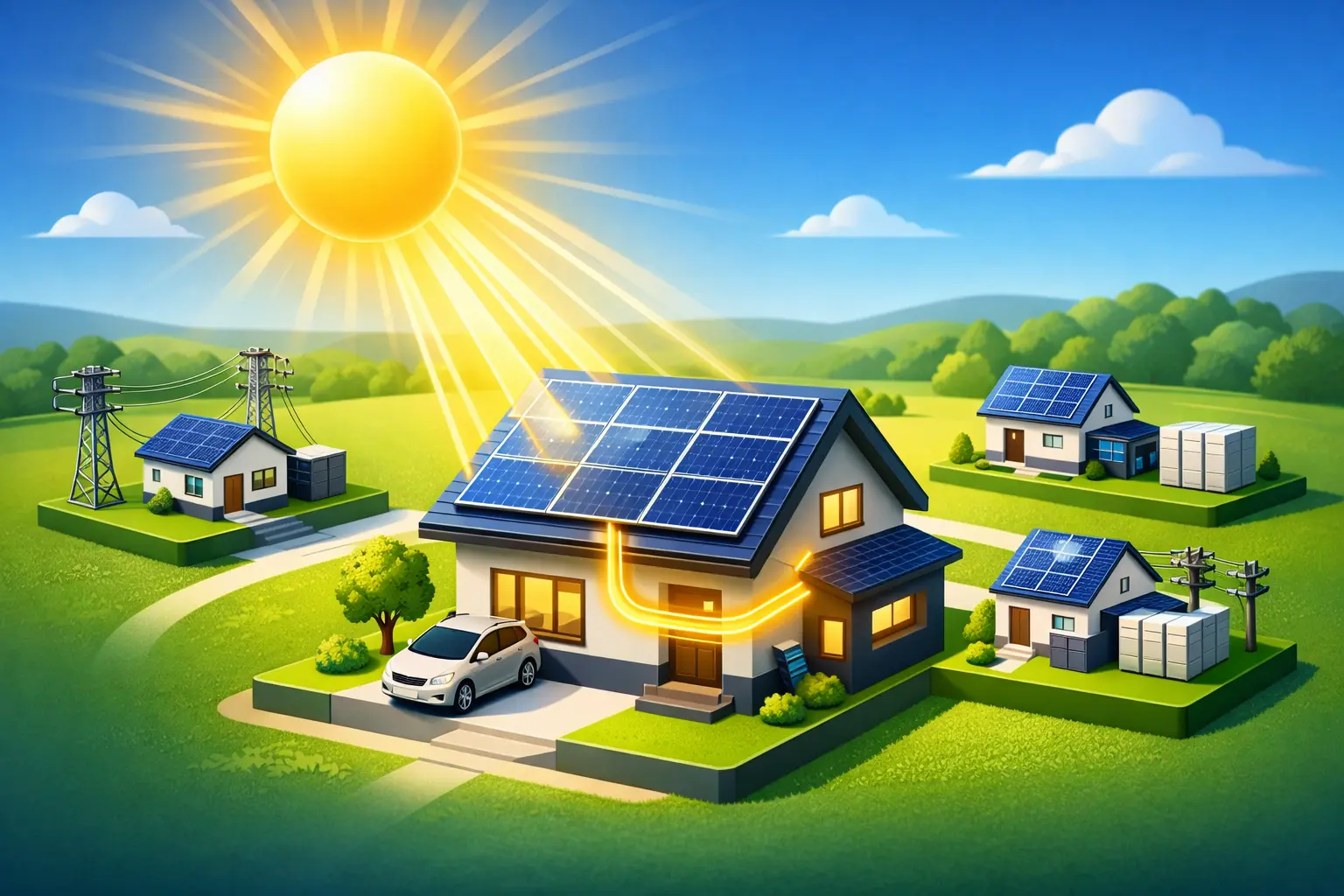
Today, solar energy has become one of the most widely discussed renewable energy sources. It is a clean, widely available, and naturally produced source. These advantages make it an important solution in addressing climate change. By converting sunlight into usable electricity, solar power reduces dependence on fossil fuels.
What Is Solar Energy?
When you sit outside on a bright sunny day, you can feel the sun's warmth on your skin. The sunlight may also make your eyes squint because it is so bright. This simple experience shows how powerful the sun really is.
Today, we can capture this powerful sunlight using solar panels. These panels absorb sunlight and convert it into usable electricity. The electricity produced from sunlight is called solar power.
Scientists and engineers have been improving solar energy technology for more than 150 years. Over time, solar panels have become more efficient, reliable, and affordable. Because of these improvements, many homes and businesses now use solar power systems.
In simple terms, solar energy is the energy that comes from the sun. The sun continuously releases light and heat toward the Earth every day. This natural energy can be converted into electricity with the help of solar panels.
What Is a Solar Panel?
A solar panel is a device that converts sunlight into electricity. Solar panels contain many small units called solar cells. These cells are made from semiconductor materials like silicon. When sunlight hits these cells, electricity is produced.
Components of a Solar Power System
A complete solar power system usually includes:
- Solar panels — capture sunlight and convert it to DC electricity
- Solar inverter — converts DC electricity to AC electricity for home use
- Mounting structure — secures panels to your roof safely
- Solar battery (optional) — stores excess electricity for night use
- Electrical wiring — connects all components together
How Solar Panels Work
Solar panels convert sunlight into electrical energy through the photovoltaic effect. Here is the step-by-step process:
Step 1 — Sunlight Hits the Solar Panels
Solar panels absorb sunlight during the day. The solar cells capture light particles called photons.
Step 2 — Photovoltaic Effect Generates Electricity
The sunlight activates electrons in the solar cells. This movement of electrons creates direct current (DC) electricity.
Step 3 — Inverter Converts Electricity
Homes use alternating current (AC) electricity. A solar inverter converts DC electricity into AC power that your appliances can use.
Step 4 — Electricity Powers Your Home
The electricity flows to your electrical panel. You can now run lights, fans, air conditioners, and all other appliances using free solar power.
Types of Solar Power Systems
There are three main types of solar power systems. Each system works differently depending on your electricity needs and location.
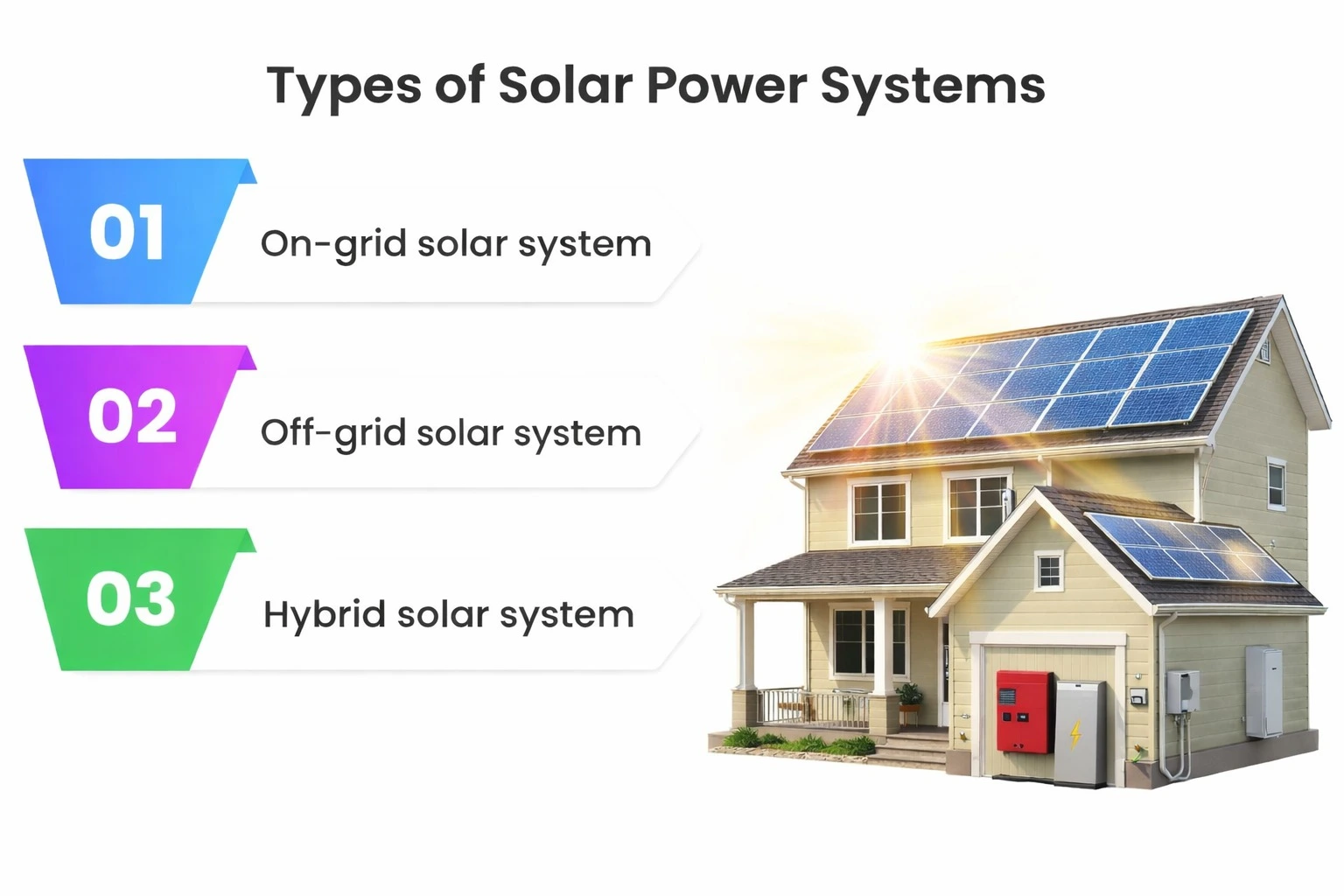
1. On-Grid Solar System
An on-grid solar system connects directly to the electricity grid. It is the most common solar system for homes in India.
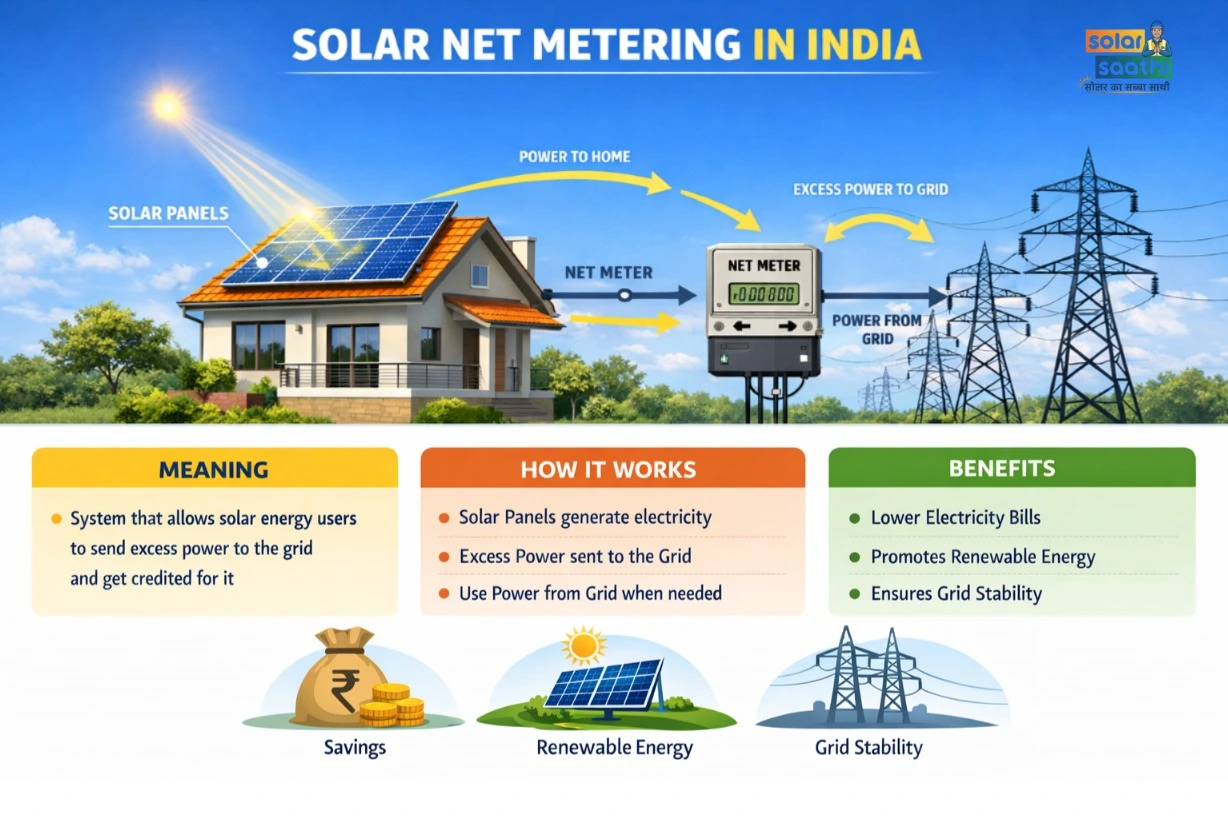
How it works: Your home first uses the solar electricity produced during the day. Extra electricity flows back to the grid through net metering. At night, your home draws electricity from the grid again.
Best for you if:
- Your area has a reliable electricity supply
- You have high daytime electricity use
- You want the lowest installation cost
- You want to earn credit through net metering
On-grid systems do not include battery storage, making them the most affordable option.
2. Off-Grid Solar System
An off-grid solar system works completely without any grid connection. It stores electricity in batteries for use at night or during cloudy days.
Best for you if:
- Your area has no grid electricity connection
- You live in a remote village, farm, or rural area
- You want complete energy independence
- Your area has frequent and prolonged power cuts
Off-grid systems have a higher upfront cost due to battery storage requirements.
3. Hybrid Solar System
A hybrid solar system combines the best of both worlds — grid connection and battery backup.
Best for you if:
- Your area has frequent but short power cuts
- You have critical appliances like refrigerators, computers, or medical equipment
- You want both solar savings and reliable backup power
Types of Solar Energy Technologies
Solar energy is not limited to rooftop panels. Several technologies convert sunlight into energy.
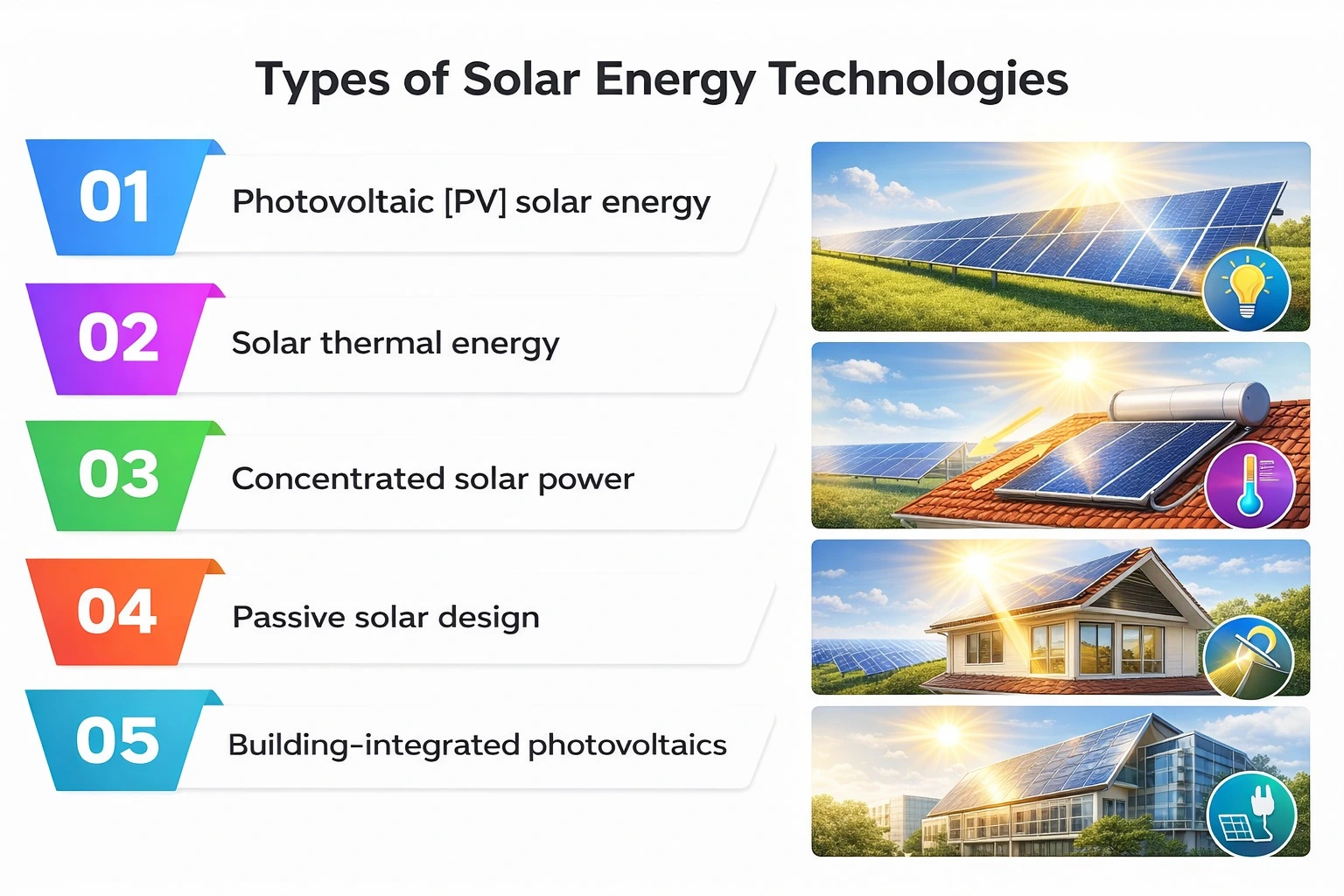
Photovoltaic (PV) Solar Energy
This is the most common solar technology used in homes and businesses. PV cells directly convert sunlight into electricity. Most rooftop solar panels in India use photovoltaic technology.
Solar Thermal Energy
Solar thermal technology produces heat instead of electricity. It uses collectors to heat water or fluids. Common uses include solar water heaters, space heating systems, and industrial heating processes.
Concentrated Solar Power (CSP)
Concentrated solar power uses large mirrors to focus sunlight onto a receiver. The intense heat creates steam, which drives turbines to generate electricity. This technology is used in large utility-scale solar power plants.
Passive Solar Design
Passive solar design uses building architecture to capture sunlight naturally. Design features like large south-facing windows, thermal mass walls, and insulated structures reduce heating and cooling costs without any panels.
Building-Integrated Photovoltaics (BIPV)
Building-integrated photovoltaics are solar materials directly integrated into building structures. Examples include solar roof tiles, solar glass windows, and solar building facades.
Where Solar Energy Is Used in India
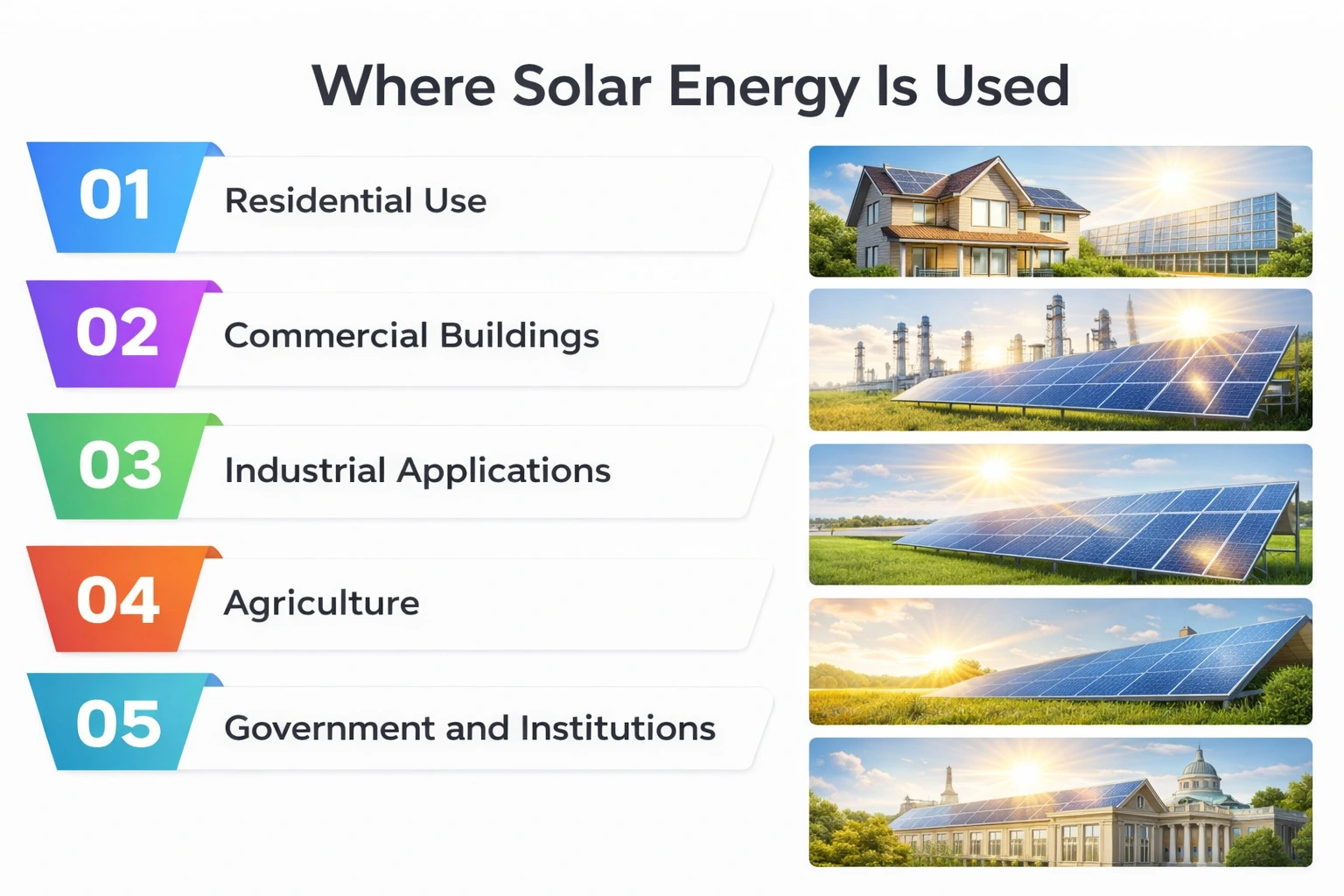
Solar energy today powers many sectors across India:
- Residential homes — Rooftop solar panels reduce electricity bills by 80–100%
- Commercial buildings — Offices and shopping complexes reduce operational costs
- Industrial factories — Large rooftop solar plants power equipment and reduce demand charges
- Agriculture — Solar pumps help farmers irrigate crops without diesel costs
- Schools and hospitals — Institutional solar reduces energy expenses and carbon emissions
Why Consult a Solar Expert Before Installing Solar Panels
Installing solar panels requires proper planning. Many systems fail or underperform due to poor design. A professional solar expert provides:
- Accurate system sizing — prevents oversizing or undersizing your system
- Roof and structure analysis — ensures safe installation on your specific roof
- Shading analysis — identifies trees or buildings that can reduce output
- Cost and ROI calculation — estimates exact investment and payback period
- Government policy guidance — explains PM Surya Ghar subsidies, net metering, and approvals
Conclusion
Solar energy has become one of the best renewable energy sources available today. It converts sunlight into clean electricity using solar panels, reduces electricity costs, and protects the environment. As technology improves and costs fall further, solar energy will only become more accessible for Indian homeowners and businesses.
Ready to go solar? Contact a Solar Saathi expert today for a free consultation and site assessment.