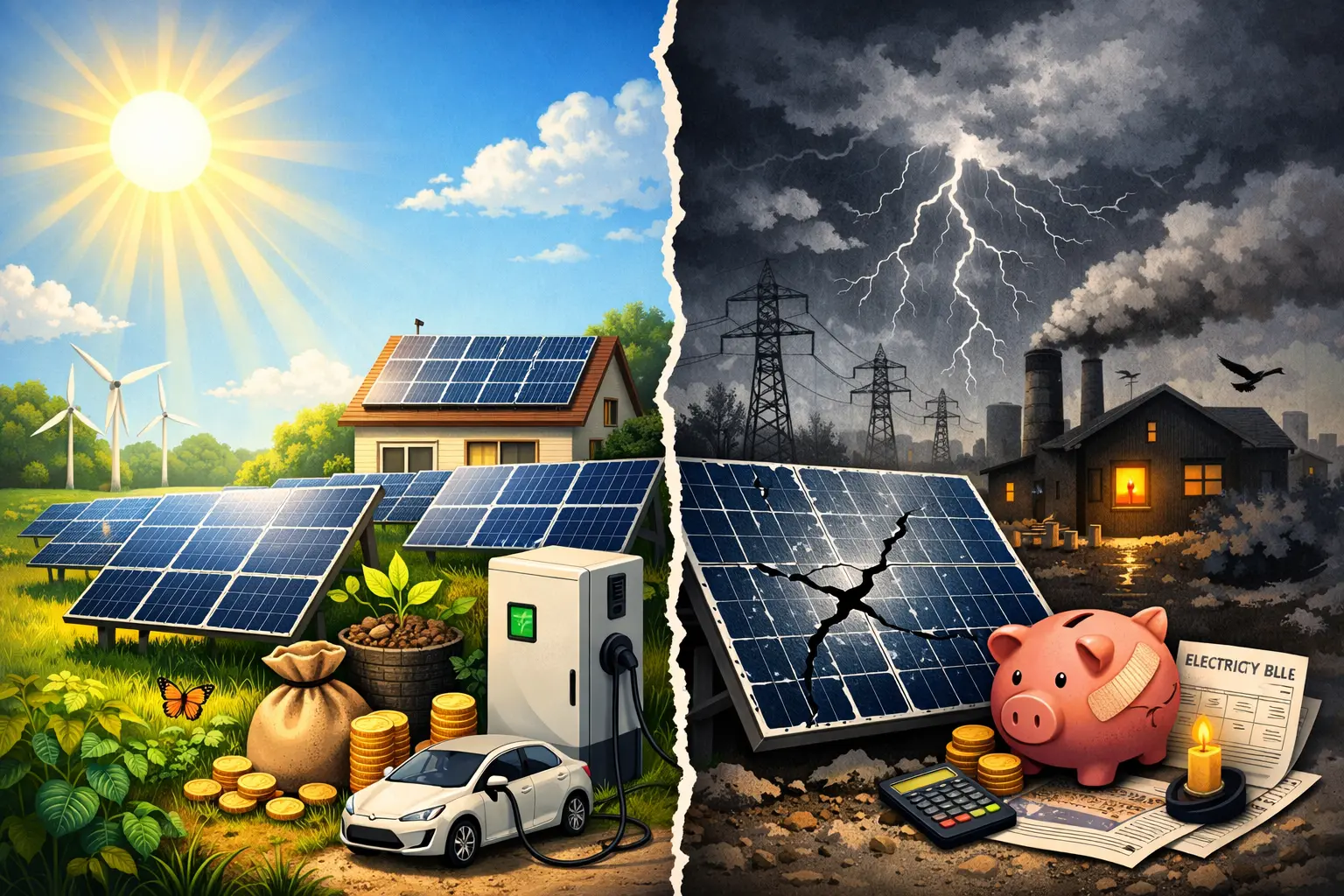
Solar energy is becoming one of the most popular renewable energy sources in the world. It uses sunlight to produce electricity through solar panels installed on rooftops or open land.
Many homeowners and businesses now install solar panels to reduce electricity bills and produce clean energy. Solar systems are also becoming more affordable and efficient.
However, before installing a solar power system, it is important to understand the pros and cons of solar energy. This guide explains the top 10 solar power advantages and disadvantages in simple terms.
Advantages of Solar Energy
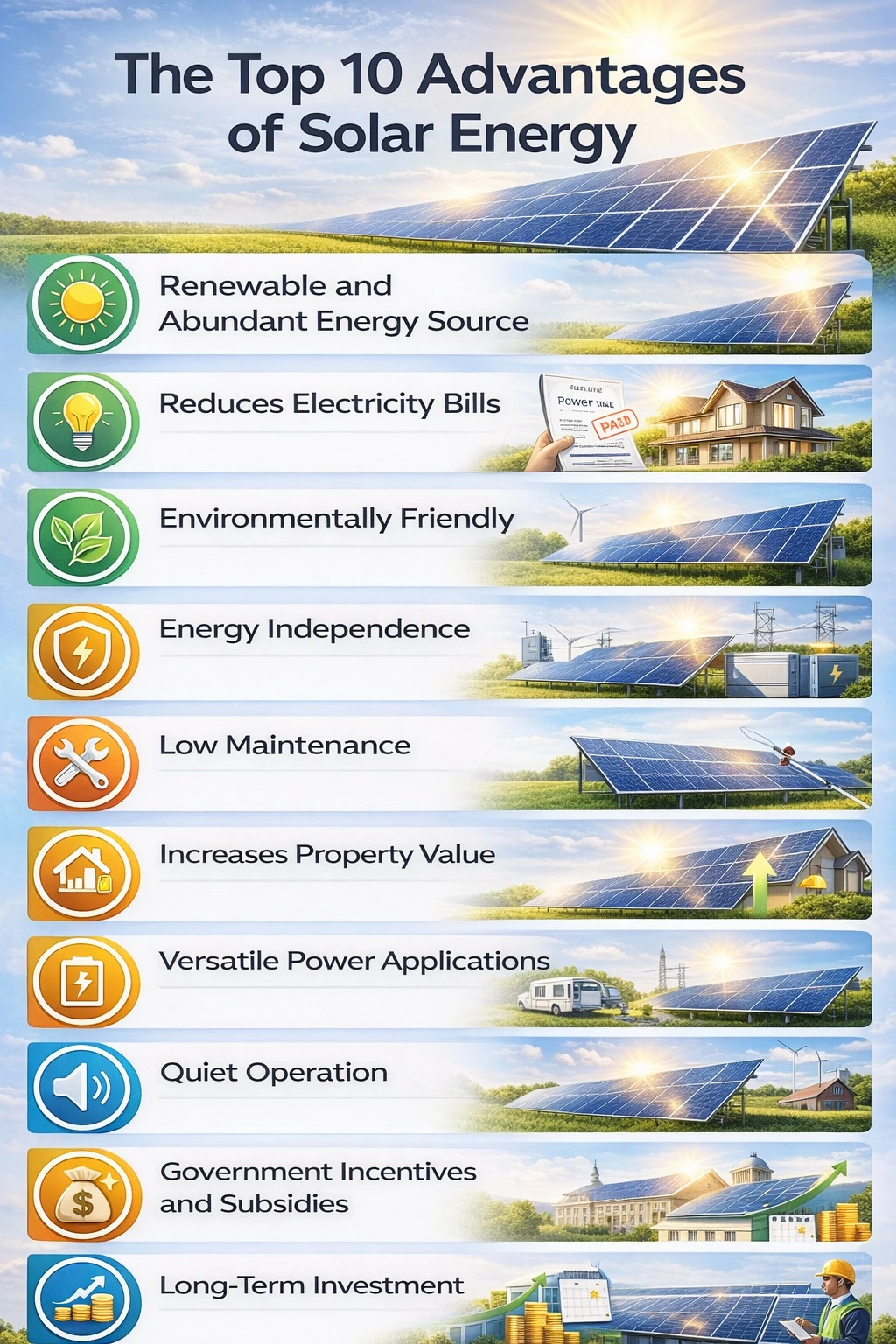
Solar energy provides many benefits for homeowners, businesses, and the environment. Below are the top 10 advantages of solar energy you should know before installing solar panels.
1. Renewable and Abundant Energy Source
Solar energy is a renewable source of power. The sun produces energy every day and will continue for billions of years. Unlike fossil fuels such as coal or oil, solar energy will not run out. This makes it one of the most sustainable energy solutions for the future.
2. Reduces Electricity Bills
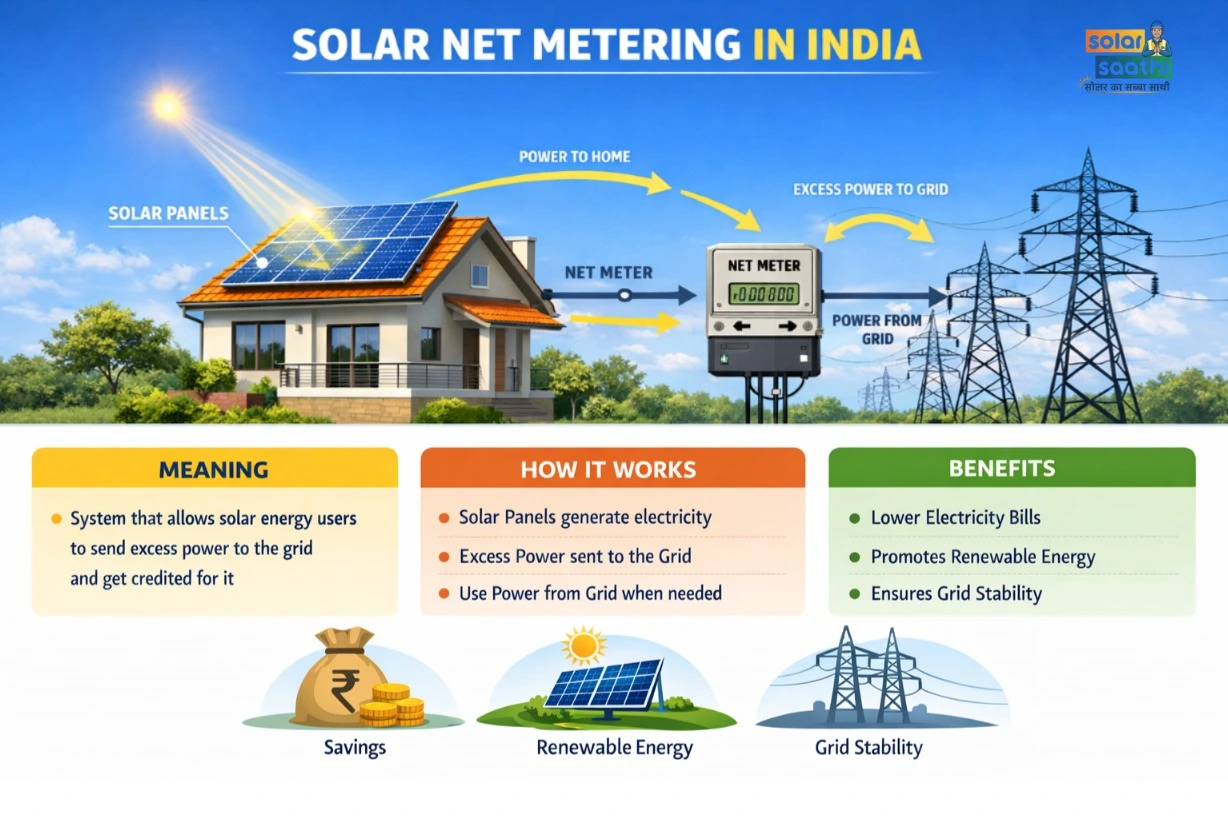
One of the biggest advantages of solar panels is lower electricity costs. Solar panels generate electricity directly from sunlight. This reduces the amount of electricity you buy from the grid. Many homeowners save a large portion of their monthly electricity bills after installing solar panels.
3. Environmentally Friendly
Solar energy produces clean electricity without releasing harmful gases. It does not produce carbon dioxide or air pollution during operation. Because of this, solar energy helps fight climate change and reduces environmental damage caused by fossil fuels.
4. Energy Independence
Solar power allows homes and businesses to produce their own electricity. This reduces dependence on utility companies. Energy independence also protects you from rising electricity prices in the future.
5. Low Maintenance
Solar panels require very little maintenance after installation. Most systems only need occasional cleaning to remove dust or dirt. Solar panels are designed to last more than 25 years. This makes them a reliable long-term energy solution.
6. Increases Property Value
Homes with solar panel systems often have higher property value. Many buyers prefer homes that already produce their own electricity. Because of this, solar energy systems can make your property more attractive in the real estate market.
7. Versatile Power Applications
Solar energy can power many different applications. It can run homes, offices, factories, and even electric vehicles. Solar power is also useful in remote areas where electricity grids are not available.
8. Quiet Operation
Solar panels generate electricity silently. They do not have noisy moving parts like generators. This makes solar energy ideal for residential areas where noise pollution should be minimal.
9. Government Incentives and Subsidies
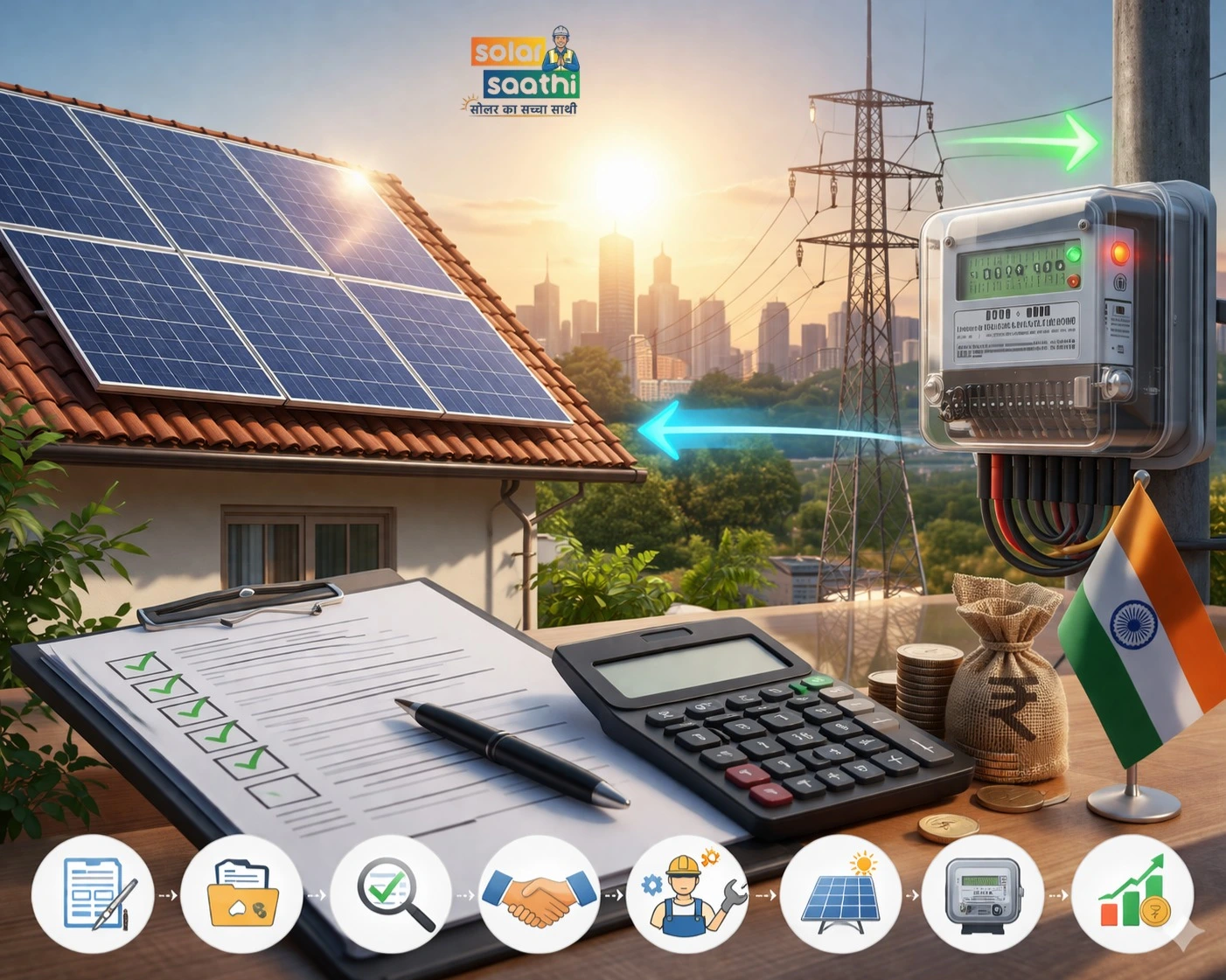
Many governments provide financial incentives for installing solar power systems. These incentives may include subsidies, tax benefits, and net-metering policies. Such programs reduce the overall cost of solar installation.
10. Long-Term Investment
Solar energy is a long-term investment. Although installation costs can be high initially, the savings over time are significant. Most solar systems recover their cost within a few years. After that, the electricity generated is almost free.
Disadvantages of Solar Energy
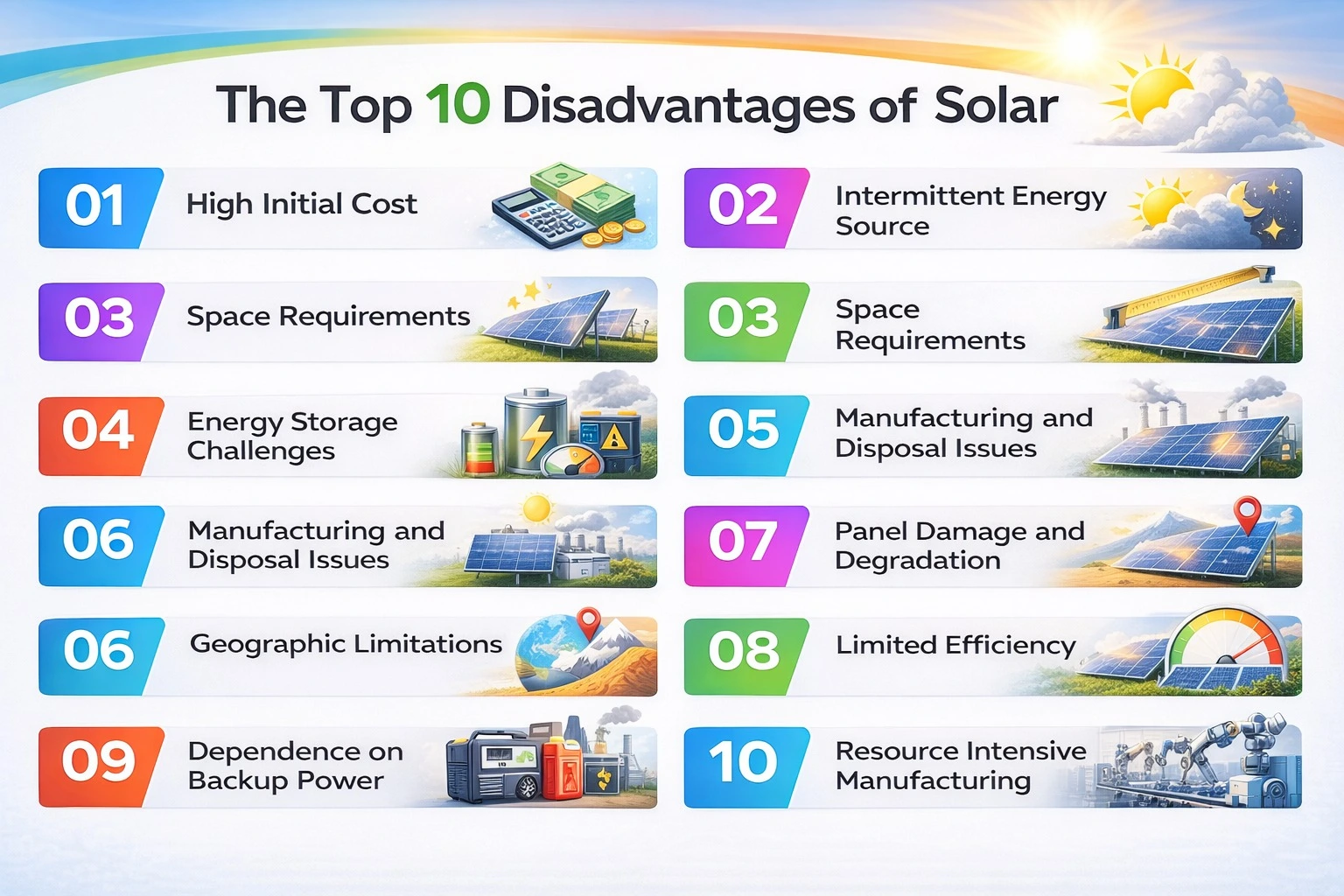
Despite its benefits, solar energy also has certain limitations. Below are the top 10 disadvantages of solar energy you should consider before installing solar panels.
1. High Initial Cost
The biggest disadvantage of solar energy is the high upfront cost. Installing solar panels, inverters, and batteries can be expensive. However, prices have been decreasing over the years, making solar more affordable.
2. Intermittent Energy Source
Solar energy depends on sunlight. Solar panels do not generate electricity at night. Cloudy weather can also reduce solar power production.
3. Space Requirements
Solar systems require enough space to install panels. Large solar power systems need significant rooftop or land area. This can be challenging in crowded urban areas with limited space.
4. Energy Storage Challenges
Solar energy storage requires batteries. These batteries store extra energy generated during the day. However, battery systems can be expensive and increase the total system cost.
5. Manufacturing and Disposal Issues
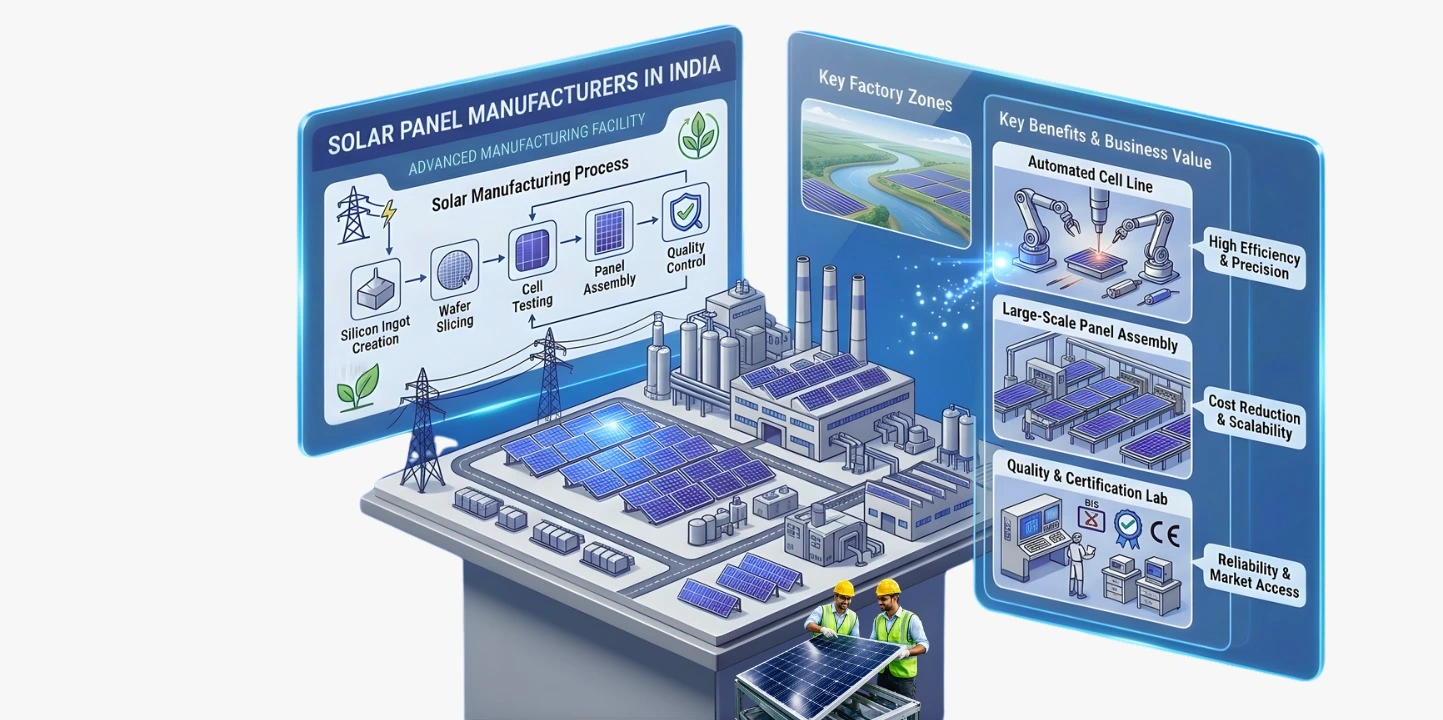
Solar panel manufacturing requires energy and chemicals. This process may cause environmental impact. At the end of their lifespan, recycling and disposing of solar panels can also be challenging.
6. Geographic Limitations
Solar power efficiency depends on geographic location. Areas with fewer sunny days generate less solar electricity. Regions closer to the equator usually produce more solar power.
7. Panel Damage and Degradation
Solar panels slowly lose efficiency over time. Weather conditions such as hail, strong winds, and dust can damage panels. Regular inspection helps maintain system performance.
8. Limited Efficiency
Solar panel technology cannot convert all sunlight into electricity. Most solar panels operate at limited efficiency levels. Although technology is improving, efficiency limitations still exist.
9. Dependence on Backup Power
Because solar power is not constant, many systems require grid connection or backup power. This ensures electricity supply during nighttime or cloudy days.
10. Resource Intensive Manufacturing
Solar panel production requires materials like silicon, lithium, and rare earth metals. Mining and processing these materials can cause environmental impact if not managed properly.
Conclusion: Is Solar Energy Worth It?
Solar energy is a clean, renewable, and cost-effective power source. It helps reduce electricity bills and carbon emissions. However, solar power also has some limitations. High installation cost and sunlight dependency are the main challenges.
Despite these drawbacks, the advantages of solar energy usually outweigh the disadvantages. With government incentives and falling prices, solar energy is becoming a smart investment for many homeowners and businesses.
Knowing the pros and cons of solar panels helps you decide if solar energy suits your property.