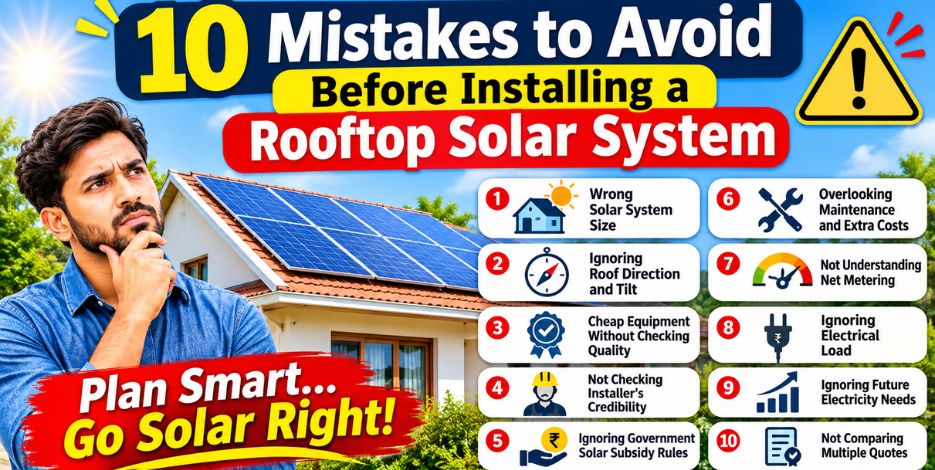
Installing a rooftop solar system is a smart way to reduce electricity bills and use clean energy. Many homeowners in India are now choosing solar panels to save money on monthly electricity costs. But installing solar panels without proper planning can lead to extra expenses, poor electricity generation, and safety problems. Before installing a rooftop solar system, it is important to understand what your home needs, how much electricity you use, and which solar equipment is right for your roof. So, what mistakes should you avoid before installing rooftop solar panels?
Here are 10 common mistakes that can help you make a better decision, save money, and get more value from your solar investment.
1. Choosing the Wrong Solar System Size
One of the most common mistakes is choosing the wrong solar system size. Some homeowners install a small solar system to save money, while others buy a large system without checking their actual electricity needs. Both decisions can create problems.
A small solar system may not produce enough electricity for your home. A large system may cost more than necessary.
How to Avoid This Mistake:
Before choosing a solar system, check your last 12 months of electricity bills. This will help you understand your average monthly electricity usage. Also, think about seasonal changes. For example, electricity use may increase during summer because of air conditioners, coolers, and fans. Choose a solar system based on your daily electricity needs, roof space, and budget.
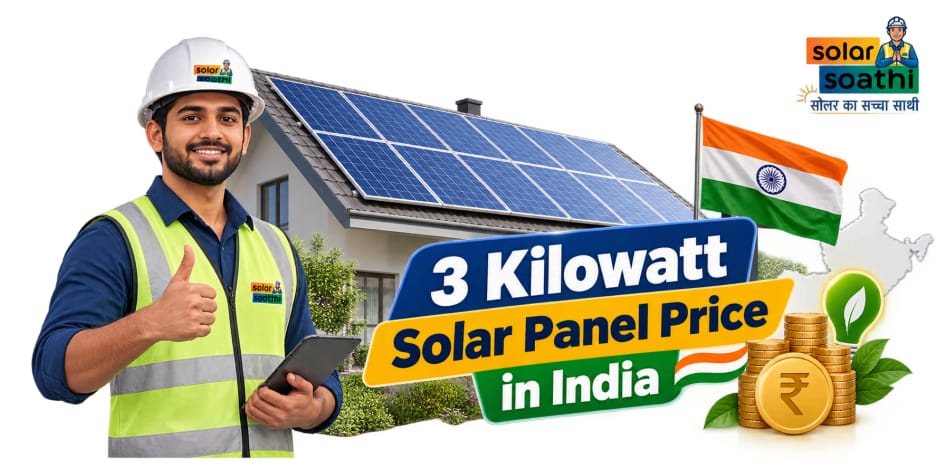
You can also read our guide on 3kW Solar Panel Price in India to understand the cost of a 3kW solar system.
2. Ignoring Roof Direction and Tilt
The direction and angle of your roof play an important role in solar electricity generation. Solar panels need proper sunlight to produce electricity. Installing panels in a shaded area or at the wrong angle can reduce their daily output. In India, south-facing solar panels generally receive good sunlight throughout the year. The suitable panel angle depends on your location and roof design.
How to Avoid This Mistake:
Before installation, check the following things:
- Roof direction and available sunlight.
- Suitable panel angle and tilt.
- Trees, buildings, or other objects that create shadows.
- Available roof space for panel installation.
Ask a solar expert to inspect your roof before deciding where to install the panels. Proper placement can help your solar system produce more electricity.
3. Choosing Cheap Solar Equipment Without Checking Quality
Saving money is important, but buying low-quality solar equipment can lead to problems later. Some homeowners choose solar panels, inverters, or mounting structures only because they are available at a lower price. Poor-quality equipment may have a shorter working life, lower electricity output, or higher repair costs.
How to Avoid This Mistake:
Before buying solar equipment, check its quality, certifications, warranty, and manufacturer details.
Pay attention to these points:
- Check the applicable BIS certification and other required approvals.
- Check ALMM requirements for eligible solar projects.
- Compare solar panel efficiency and product warranties.
- Choose a suitable inverter from a trusted manufacturer.
- Check the quality of mounting structures, cables, and other electrical parts.
Do not make your decision based only on the lowest price. Good-quality equipment can help you get better value over the long term.
4. Not Checking the Solar Installer's Credibility
Choosing the wrong solar installer can create many problems. Even good solar panels may not work properly when installation is done incorrectly. An inexperienced installer may use poor wiring, weak mounting structures, or unsuitable equipment. You may also face problems when asking for repairs or warranty support.
How to Avoid This Mistake:
Before hiring a solar installation company, check its background and past work.
Here are some things to check:
- Read customer reviews and feedback.
- Ask about previous rooftop solar projects.
- Check the installer's technical knowledge.
- Ask about installation and after-sales support.
- Check the vendor's registration or empanelment status, where required.
For government subsidy projects, check the current approved vendor requirements before placing your order. Choosing the right installer can help prevent installation and service-related problems.
5. Ignoring Government Solar Subsidy Rules
The Indian government provides financial support for eligible residential rooftop solar installations under schemes such as PM Surya Ghar: Muft Bijli Yojana. But many homeowners do not check the subsidy rules before purchasing solar equipment. This can lead to problems with eligibility, registration, or subsidy applications.
How to Avoid This Mistake:
Before starting your solar installation, check the latest government guidelines.
Keep these points in mind:
- Check the subsidy amount applicable to your home.
- Register through the official government portal.
- Check the approved vendor list.
- Understand the required documents.
- Follow the prescribed installation and inspection process.
Do not purchase or install equipment before checking the required registration process.
For accurate information, visit the official PM Surya Ghar website.
6. Overlooking Solar Maintenance and Extra Costs
Many people think that solar panels do not need any maintenance after installation. This is not completely true. Solar panels need regular cleaning because dust, bird droppings, and dirt can reduce sunlight reaching the panel surface. Apart from cleaning, electrical connections and inverters may also need occasional checks.
How to Avoid This Mistake:
Before installing solar panels, ask your installer about maintenance requirements.
Keep these points in mind:
- Clean solar panels regularly.
- Check cables and electrical connections.
- Inspect the mounting structure.
- Keep the inverter in a suitable location.
- Understand the warranty and repair costs.
- Ask about Annual Maintenance Contracts (AMC).
Also, keep some money aside for future repairs or inverter replacement. Knowing these costs in advance will help you plan your solar budget properly.
7. Not Understanding Net Metering
Net metering is an important part of a rooftop solar system. During the daytime, your solar panels may produce more electricity than your home needs. The extra electricity can be sent to the electricity grid, depending on your local electricity provider's rules. Many homeowners assume that they will automatically receive money for all the extra electricity they send to the grid. This is not always true. The benefits depend on the applicable net metering policy and electricity tariff.
How to Avoid This Mistake:
Before installing solar panels, contact your local DISCOM (electricity distribution company) and understand its rules.
Ask about:
- Net metering eligibility.
- Application and approval process.
- Electricity meter requirements.
- Meter installation charges.
- Rules for extra electricity sent to the grid.
- Applicable electricity rates and billing method.
Understanding net metering before installation can help you estimate your electricity bill savings more accurately.
8. Installing Solar Panels Without Checking Electrical Load
Your solar system should match your home's electricity requirements. Many homeowners choose solar panels without checking their existing electrical wiring, inverter capacity, or appliance load. This can create problems when running heavy appliances such as air conditioners, water pumps, refrigerators, and washing machines.
How to Avoid This Mistake:
Get your home's electrical load checked before installation.
Ask an experienced electrician or solar professional to check:
- Total electricity load of your home.
- Daily electricity consumption.
- Inverter capacity.
- Existing wiring condition.
- Earthing and electrical safety.
- Starting power requirements of heavy appliances.
This step can help you choose the right inverter and avoid electrical problems.
9. Ignoring Your Future Electricity Needs
Your electricity needs may increase in the coming years. For example, you may buy an electric vehicle, install another air conditioner, or add new electrical appliances to your home. A solar system that meets your current needs may not produce enough electricity in the future.
How to Avoid This Mistake:
Think about your future electricity requirements before finalising your solar system.
Consider these questions:
- Are you planning to buy an electric vehicle?
- Will you add more air conditioners?
- Are you planning home renovations?
- Will your family size increase?
- Do you plan to install more electrical appliances?
Discuss future expansion with your solar installer.
Ask whether your inverter, roof space, and electrical setup can support additional solar panels later.
Planning ahead can help you avoid unnecessary replacement costs.
10. Not Comparing Multiple Solar Installation Quotes
Another common mistake is accepting the first solar installation quote you receive. Different solar companies may offer different prices, equipment brands, warranties, and installation services. Choosing a company without comparing these details can lead to higher costs or poor-quality work.
How to Avoid This Mistake:
Get at least three quotations from different solar companies before making your decision.
Compare the following details:
- Total solar system price.
- Solar panel brand and specifications.
- Inverter brand and capacity.
- Mounting structure quality.
- Installation charges.
- Product and performance warranties.
- Maintenance and after-sales service.
- Installation time.
Do not compare companies based only on their final prices. Check what equipment and services are included in each quotation. A detailed comparison will help you choose a suitable solar company for your home.
Conclusion
Installing a rooftop solar system is a long-term investment. A little planning before installation can help you avoid unnecessary expenses, poor electricity generation, and installation problems. Before choosing a solar system, check your electricity usage, roof direction, equipment quality, installer credentials, government subsidy rules, and future energy needs. Also, understand net metering and compare quotations from different solar companies. Most importantly, do not make your decision in a hurry. Take advice from a solar professional and choose a system that matches your home, budget, and electricity requirements.
Need help choosing the right rooftop solar system?
Solar Saathi provides solar consultancy services to help homeowners understand their solar requirements, system size, costs, and installation needs.
Frequently Asked Questions
1. What should I check before installing a rooftop solar system?
Before installing rooftop solar panels, check your electricity bills, roof space, roof direction, daily sunlight, system size, equipment quality, and installation costs. Also, check government subsidy rules and net metering requirements.
2. How do I choose the right solar system size for my home?
Check your last 12 months of electricity bills to understand your average electricity usage. Based on your consumption, roof space, and budget, a solar professional can suggest a suitable system size, such as 1kW, 3kW, or 5kW.
3. Can I get a government subsidy for rooftop solar installation in India?
Yes. Eligible residential consumers can get financial support under the PM Surya Ghar: Muft Bijli Yojana. The subsidy depends on the applicable government guidelines, system capacity, and eligibility conditions.
4. How often should I clean my rooftop solar panels?
Solar panels should generally be cleaned every 2 to 4 weeks, depending on dust levels and local weather conditions. Homes in dusty areas may need more frequent cleaning. Always follow the manufacturer's cleaning instructions.
5. Is solar consultancy necessary before installing rooftop solar panels?
Solar consultancy can help you understand your electricity needs, choose the right system size, check roof suitability, estimate installation costs, and understand subsidy requirements.