
Are high electricity bills affecting your monthly budget? A solar system can help reduce your power costs. The 5kw solar panel price in India in 2026 depends on the system type, panel quality, inverter and battery needs. A standard 5kW on-grid system may cost around ₹2.4 lakh to ₹3.2 lakh before subsidy. Eligible homes can get a central subsidy of ₹78,000. This guide explains system prices, government support, power generation, roof needs and installation costs so you can plan your purchase.
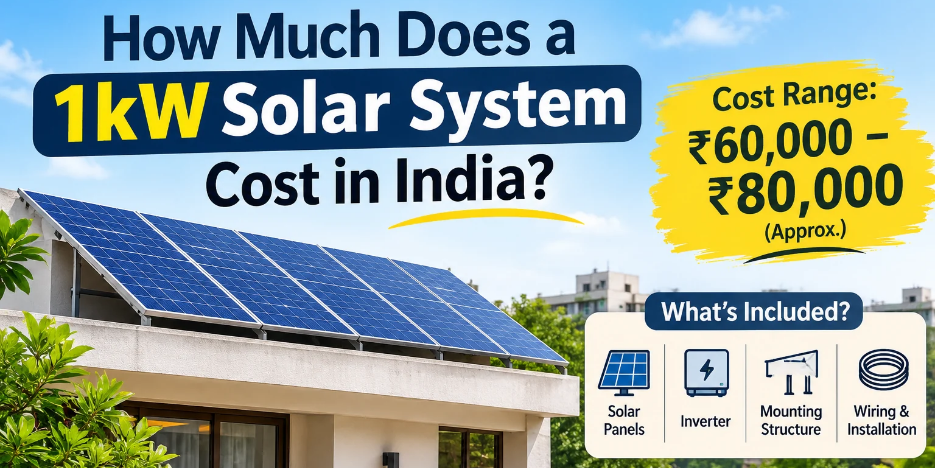
Before comparing the 5kW system cost, you can also check the 1kW solar panel price in India with subsidy to understand the pricing of smaller residential solar systems.
What Is a 5kW Solar Power System?
A 5kW solar system has solar panels with a total power rating of 5,000 watts. These panels use sunlight to make electricity for your home. The system also has an inverter, wires, mounting frames and safety devices. A battery is needed for backup in an off-grid or hybrid setup.
Who Should Choose a 5kW Solar System?
A 5kW system suits homes with high power use. It can be a good choice for large families, villas and homes with air conditioners, water pumps and other major appliances.
Choosing the right solar capacity depends on your household's electricity use, roof space and budget. You can get professional guidance through solar consultancy services by Solarsaathi to select a suitable solar system for your home.
Ideal Household Size and Monthly Electricity Consumption
Homes with four to six people may need this system. It can suit households that use around 500 to 700 units of electricity each month. Check your last 12 electricity bills before choosing the system size.
5kW Solar System Price in India 2026: Complete Cost Breakdown
The 5 kw solar system price depends on the equipment and type of setup. The final 5kw solar system price depends on battery size, panel brand, roof work and local labour charges.
Price & Feature Comparison: On-Grid vs Off-Grid vs Hybrid Systems
| Feature | On-Grid (Grid-Tied) | Hybrid (Grid + Battery) | Off-Grid (Independent) |
|---|---|---|---|
| Cost per kW (Approx.) | ₹50,000 – ₹85,000 | ₹70,000 – ₹1,40,000 | ₹80,000 – ₹1,20,000+ |
| 5kW System Cost | ₹2,50,000 – ₹3,50,000 | ₹3,50,000 – ₹7,00,000 | Higher due to large battery bank |
| Battery Needed? | No | Yes (Smaller emergency backup) | Yes (Massive storage bank) |
| Grid Connection | Yes (Tied to DISCOM) | Yes (Tied to DISCOM) | No (100% autonomous) |
| Net Metering | Yes (Exports surplus for credits) | Yes (Where DISCOM permits) | No |
| Works During Power Cuts? | No (shuts down for safety/anti-islanding) | Yes (switches to battery) | Yes |
| PM Surya Ghar Subsidy | Yes (Full subsidy up to ₹78,000) | Yes / Partial (Varies by DISCOM rules) | No subsidy available |
| 10-Year Maintenance / Replacement | Lowest (No batteries to replace) | Moderate (Battery replacement every 8–12 yrs for lithium) | Highest (Frequent battery replacements) |
An on-grid system connects to the local power grid. It costs less because it does not need batteries.
An off-grid system uses batteries to store solar power. It can supply electricity without a grid connection.
A hybrid system connects to the grid and also stores power in batteries. It costs more than a basic on-grid setup.
Solar Panel, Inverter, Battery and Installation Costs
For a 5kW setup, solar panels may cost ₹1.1–1.5 lakh. The inverter may cost ₹35,000–₹55,000. Frames, wires, safety devices and labour may add ₹40,000–₹70,000. Batteries may add ₹80,000 to ₹2 lakh or more. The final cost of a 5kw solar system depends on the battery type and storage size.
Mono PERC vs TOPCon Solar Panel Price Comparison
Mono PERC Solar Panels (Per Watt):
- Non-DCR: ₹12–₹16 per watt → ₹60,000–₹80,000 for 5 kW
- DCR-Compliant: ₹22–₹26 per watt → ₹1,10,000–₹1,30,000 for 5 kW
TOPCon Solar Panels (Per Watt):
- Non-DCR: ₹14–₹18 per watt → ₹70,000–₹90,000 for 5 kW
- DCR-Compliant: ₹24–₹28 per watt → ₹1,20,000–₹1,40,000 for 5 kW
Mono PERC panels are a popular choice for residential solar systems. They offer reliable performance and good power output at an affordable price.
TOPCon panels use advanced solar cell technology. They can generate more power from the same roof area and offer better efficiency, although their initial cost is generally higher.
To compare different solar panel options and their costs, check our detailed guide on solar panel price in India.
Factors That Affect the Final Installation Cost
The main factors are:
- Solar panel brand and wattage.
- Inverter type and brand.
- Battery size and type.
- Roof height and structure.
- Wiring and safety equipment.
- Local labour and transport charges.
PM Surya Ghar Muft Bijli Yojana: Subsidy Explained
The PM Surya Ghar Muft Bijli Yojana helps Indian homes pay less for rooftop solar. It gives central financial support to eligible residential users.
Central Government Subsidy for 5kW Solar Systems
Under the PM Surya Ghar: Muft Bijli Yojana, the central government provides a subsidy for residential rooftop solar installations. The subsidy structure for a 5 kW system is as follows:
- First 2 kW: ₹30,000 per kW → ₹60,000
- 3rd kW: ₹18,000 → ₹18,000
- Above 3 kW (4th and 5th kW): ₹0 → (No additional central subsidy is provided for capacity exceeding 3kW)
Total Central Government Subsidy: ₹78,000
For a better understanding of residential solar costs and subsidy benefits at a smaller capacity, read our guide on 3kW solar panel price in India.
Eligibility Criteria and Required Documents
The applicant must have a valid home electricity connection and a suitable roof. The system must follow the scheme rules and use an approved vendor.
Residency & Ownership: You must be an Indian citizen and own the residential property where the system is installed.
Electricity Connection: You must have a valid, active residential electricity connection from your local DISCOM (such as JVVNL in Jaipur/Rajasthan) with a load capacity that matches or supports a 5 kW installation.
Approved Equipment (ALMM & BIS):
- Solar panels must be listed on the MNRE Approved List of Models and Manufacturers (ALMM).
- Inverters must be BIS (Bureau of Indian Standards) certified. [1]
Empanelled Vendor: The installation must be executed and commissioned by a government-empanelled/registered solar vendor.
Net Metering: The system must be a grid-connected Net-Metered Rooftop Solar (RTS) setup approved and inspected by your DISCOM.
Required Documents
- Identity Proof: Aadhaar Card, Voter ID Card, or Passport.
- Address & Property Proof: Latest paid electricity bill from your DISCOM.
- Ownership / Premises Proof: Land ownership documents, municipal tax receipt, or lease/rent agreement (with property owner's NOC if applicable).
- Bank Account Details: Passbook copy or cancelled cheque linked to the applicant (for direct benefit transfer/subsidy disbursement).
Technical & Installation Details:
- Quotation and technical specifications of the solar panels and inverter provided by your empanelled vendor.
- Net metering application form and feasibility approval letter issued by the DISCOM.
- Post-installation joint inspection report and commissioning certificate (submitted after setup is completed).
Step-by-Step Guide to Applying for Solar Subsidy
- Visit the official PM Surya Ghar website.
- Select your state and electricity distribution company.
- Enter your consumer number and mobile number.
- Submit the rooftop solar application.
- Wait for DISCOM approval.
- Select a registered vendor and install the system.
- Apply for net metering and complete the inspection.
- Submit your bank details through the portal for subsidy payment.
The actual 5kw solar price depends on the final approved project cost and scheme rules.
How Much Electricity Does a 5kW Solar System Generate?
A 5kW system can make around 20–25 units of electricity per day under good sunlight. Actual output depends on weather, panel direction and shade.
Daily Electricity Generation
A 5kW system may produce 20–25 units per day on average.
Monthly Electricity Generation
Monthly output can be around 600–750 units. Rainy days and winter sunlight may lower this figure.
Annual Electricity Generation
Annual output may range from 7,200 to 9,000 units. Your location and roof conditions affect the final result.
What Can a 5kW Solar System Run in an Indian Home?
During peak sunlight hours, a 5kW system easily powers a combination of heavy and light household loads:
- Air Conditioners: 1 to 2 units of 1.5-ton inverter ACs running together during the day, alongside basic loads.
- Refrigerators: A standard double-door or large refrigerator (286L+) running 24/7.
- Washing Machine & Microwave: Can be run during daytime peak generation hours.
- Everyday Essentials: Multiple LED lights, ceiling fans, a 1 LED TV, Wi-Fi router, and laptop/mobile chargers.
- Heavy Appliances (with smart management): Water pumps, geysers, or induction cooktops can run, but you should avoid running all heavy appliances at the exact same moment to prevent overloading the 5kW threshold.
Challenges and Important Considerations Before Installing a 5kW Solar System
A rooftop solar system needs some planning before installation. Here are a few points to keep in mind.
Initial Investment and Hidden Installation Costs
The starting cost can be high. Extra charges may apply for roof repairs, longer wires, new frames and meter work. Ask for a full price list before paying.
Roof Space, Shading and Structural Limitations
A 5kW system may need around 400–500 square feet of open roof space. Trees, walls and nearby buildings can block sunlight. Check the roof strength before installation.
Seasonal Changes in Solar Electricity Generation
Solar output changes with the weather. Summer can bring good power output, while cloudy days and rain can lower generation. Your monthly bill savings may also change with the season.
Grid Dependency and Power Cut Limitations
A normal on-grid system stops working during a power cut for safety. You need a hybrid or off-grid setup to get backup power during an outage.
Subsidy Approval and Installation Challenges
Subsidy payment depends on the scheme rules, correct documents and successful system checks. Wrong bank details or an unapproved installation can delay payment. Use a registered vendor and follow the official application steps.
Conclusion
The 5kw solar system price in India in 2026 depends on panel type, inverter, battery and installation work. An on-grid setup may cost ₹2.5–3.5 lakh before subsidy. Eligible homes can get up to ₹78,000 in central support. Before buying, check your monthly power use, roof space and vendor quote. Solarsaathi can help you understand your solar needs and plan a suitable rooftop solar setup for your home.
Publishing Note: All equipment prices are indicative estimates, not fixed market rates. Confirm current vendor quotations, DCR requirements and DISCOM rules before publishing price or subsidy claims.
Frequently Asked Questions
1. What Is the Price of a 5kW Solar System in India in 2026?
A 5kW on-grid system may cost ₹2.5–3.5 lakh before subsidy. Off-grid and hybrid systems can cost more because they need batteries.
2. What Is the 5kW Solar System Price After Subsidy?
After a central subsidy of ₹78,000, an on-grid system priced at ₹2.5–3.5 lakh may cost around ₹1.72–2.72 lakh.
3. How Much Electricity Does a 5kW Solar System Generate Per Day?
A 5kW system may produce around 20–25 units per day under good sunlight. Weather, shade and panel direction affect the output.
4. Is ₹78,000 the Maximum Government Subsidy for a 5kW System?
Yes. The central residential subsidy is capped at ₹78,000 for systems of 3kW or more in general states.
5. Can a 5kW Solar System Run Two ACs?
Yes, it may run two 1.5-ton inverter ACs during sunny hours. The total power use of other appliances must also stay within the inverter limit.
6. How Much Roof Space Is Needed for a 5kW Solar System?
A 5kW system may need around 400–500 square feet of open roof space. The exact area depends on panel size and layout.
7. Is an On-Grid or Hybrid Solar System Better for a Home?
An on-grid system costs less and suits homes with steady grid power. A hybrid system costs more but gives battery backup during power cuts.
8. Can I Get a Bank Loan for a 5kW Solar Installation?
Yes. Several banks offer loans for rooftop solar systems under PM Surya Ghar. Loan approval, interest rates and EMI depend on bank rules and your financial details.
9. How Long Does It Take to Recover from Solar Investment?
Many homes may recover their solar investment in around 4–7 years. The time depends on system cost, power generation, electricity rates and monthly savings.
10. Can I Charge My Electric Vehicle Using Solar Power?
Yes. A 5kW solar system can charge an electric vehicle using extra solar power. Charging time depends on the car battery and charger size.
11. How Long Does a 5kW Solar System Last?
Solar panels can last 25 years or longer with proper care. Inverters and batteries may need replacement earlier.